The top 10 entertainment apps on iOS and Android in USA, Brazil, Japan, India, Germany, UK, and Korea

The times, they are a-changing, as Bob Dylan sang. Entertainment apps are changing FAST, with major global trends competing with country-specific offerings. The era of monolithic entertainment apps is over, as today’s charts show a fragmented, format-driven landscape, where niche short-form, local OTT, and AI-enhanced apps coexist with global giants. In this post, I’m going to explore the top 10 entertainment apps that are dominating in 2025, based on insights from Apptopia.

Scroll down to see insights from:

  • United States
  • Brazil
  • Japan
  • India
  • Germany
  • United Kingdom
  • Korea

Major global trends: short-form drama, AI, and ad-supported video on demand

Short-form drama is a global sensation, with massive players like DramaBox, ReelShort, and many others. Literally every country shows a rise in short drama apps. Korea is the leader, with the most short-form apps in the top charts. Brazil and the UK also show high adoption, with multiple apps ranked.

Also, AI-driven entertainment is growing fast. We see that the UK, Germany, and Korea are leading experimentation with AI chat, character interactions, and creative UGC tools as apps like PolyBuzz, Talkie, Zeta, and Ply Buzz show early traction, especially among iOS users.

Finally, AVOD, or ad-supported video on demand, is surging. (As is FAST, or free ad-supported streaming TV, which is generally scheduled or linear rather than on-demand.) Brazil, India, and the U.S. show the most robust AVOD ecosystems, with Tubi, PlutoTV, MX Player, and JioTV frequently charting, while Germany and the UK also have strong AVOD-adjacent platforms such as Joyn and itvX.


Short-form drama

AI/chat content

Local OTT

AVOD popularity

Music apps

Top global platforms

USA

ReelShort, DramaBox

Low presence

Local players are also mostly global leaders

High – Tubi, PlutoTV, Roku

Spotify, YouTube

Netflix, YouTube, TikTok, Prime Video

BRA

DramaBox, GoodShort, ReelShort, RapidTV, DramaWave

Low presence

Globoplay

Very high – Tubi, PlutoTV

Spotify

Netflix, Prime Video, YouTube, TikTok

JPN

Kuku TV 

Low presence

TVer, ABEMA, U-Next

Moderate

Spotify

Netflix, YouTube, TikTok

IN

ReelShort, DramaBox 

Eloelo (live chatroom, social)

JioCinema, JioTV, ZEE5, SonyLIV, MX Player

Very high – AVOD dominates

Spotify (iOS), JioSaavn

Netflix, Prime Video, YouTube

DE

ReelShort, DramaBox

PlyBuzz (AI), rising interest

Joyn, ZDF, MagentaTV

Moderate – Joyn, PlutoTV

Spotify, Shazam

Netflix, Prime Video, YouTube, TikTok

UK

ReelShort, DramaBox

PolyBuzz, Talkie (AI chat)

BBC iPlayer, itvX

Moderate – Tubi, itvX

Spotify

Netflix, Prime Video, YouTube, TikTok

SK

DramaBox, NetShort, FlickReels, DramaWave, ShortMax, RapidTV

Zeta (AI chat – Android)

Coupang Play, MegaBox

Low to moderate

Spotify, YouTube Music

Netflix, TikTok

No surprise: the leading entertainment apps include Netflix, Disney+, YouTube, and Spotify, which generally have global presences. More interesting, perhaps: each market has its own unique players that are dominating locally.

United States: top entertainment apps

There’s been a lot of change for top 10 entertainment apps in the United States.

Short-form drama apps are booming, AVOD (ad-supported video-on-demand) is surging, and the streaming giants (Netflix, Max, and Amazon Prime Video) still dominate: they’re still core entertainment destinations despite the entertainment app market saturation.

The biggest shift: the ReelShort/DramaBox phenomenon is arguably the biggest change. These apps barely existed in charts 12–18 months ago.

iOS

Android

TikTok

ReelShort – Stream Drama & TV

ReelShort – Stream Drama & TV

Tubi: Movies & Live TV

Max: Stream HBO, TV, & Movies

Netflix

YouTube

Max: Stream HBO, TV, & Movies

Spotify

DramaBox – Stream Drama Shorts

Amazon Prime Video

Apple TV

DramaBox – Stream Drama Shorts

Disney+

The Roku App (Official)

Prime Video

Tubi: Movies & Live TV

The Roku App (Official)

Netflix

PlutoTV: Live TV & Free Movies

Brazil: top 10 entertainment apps

Brazil LOVES short-form drama, and these apps are exploding here.

DramaBox, GoodShort, ReelShort, DramaWave, and RapidTV all show up, and many are on both platforms. That’s 5 different short drama apps, showing a dramatic move towards snackable storytelling in local languages and with regional appeal.

Interestingly, Globoplay, Brazil’s homegrown streaming platform, ranks high on both platforms. Brazil is 1 of the few markets where a national competitor is prominent in top 10 entertainment app rankings.

iOS

Android

Max: Stream HBO, TV, & Movies

DramaBox – Stream Drama Shorts

TikTok

GoodShort – Movies & Dramas

DramaBox – Stream Drama Shorts

DramaWave – Dramas & Movies

Amazon Prime Video

Max: Stream HBO, TV, & Movies

Spotify – Music and Podcasts

RapidTV – Short Dramas

Disney+

Netflix

YouTube

Globoplay: Novelas, series e +

Netflix

ReelShort – Stream Drama & TV

GoodShort – Movies & Dramas

Amazon Prime Video

Globoplay: Novelas, series e +

YouTube Kids

Japan: top 10 entertainment apps

Short-form drama is winning everywhere, apparently: this is a global trend.

In Japan, local streamers dominate mainstream viewing, including TVer (a joint offering from Japan’s major broadcasters) and ABEMA. Both are top-tier Japanese services, indicating that domestic content remains deeply important. U-Next, another Japanese giant, also performs well and offers a wide content catalog including anime.

This makes sense: Japanese people like Japanese content that is available in the Japanese language. (Who wouldn’t?)

That said, Netflix, Amazon Prime Video, and TikTok still show up, so Japan, despite its strong local ecosystem, still embraces international platforms.

iOS

Android

TikTok Lite

TVer(ティーバー) 民放公式テレビ配信サービス

(TV app)

DramaBox – Stream Drama Shorts

DramaBox – Stream Drama Shorts

Netflix

ABEMA(アベマ)テレビやアニメ等の動画配信アプリ

(video streaming app)

TikTok – Global Video Community

Netflix

TVer(ティーバー) 民放公式テレビ配信サービス

(TV app)

Amazon Prime Video

GoodShort – Movies & Dramas

GoodShort – Movies & Dramas

U-Next – Unlimited viewing of movies, dramas, anime, and other videos

YuzuDrama – Short Drama Feast

Spotify – Music and Podcasts

U-Next – Unlimited viewing of movies, dramas, anime, and other videos

NetShort – Popular Dramas & TV

DramaWave – Dramas & Movies

Amazon Prime Video

Disney+

India: top entertainment apps

Jio is everywhere in India, with JioHotstar, JioCinema, and JioTV dominating the charts. These are bundled with Reliance Jio mobile and data plans, giving them a massive installed base … and showing how telco integration is driving entertainment app adoption at scale in India.

Also, local is winning in India’s massive market.

ZEE5, MX Player, Sony LIV, and Kuku TV show India’s preference for Indian-language content, especially regional TV, movies, and drama. You still see Netflix, Amazon Prime Video, YouTube, and Spotify, but they’re not necessarily at the top of the heap.

iOS

Android

District: Movies Events Dining

JioHotstar

JioHotstar

Kuku TV: Reel Shows & Movies

Spotify: Music and Podcasts

JioCinema – Shows, Movies, & More

MX Player

JioTV: Live TV, Cath-Up & OTT

ZEE5: Movies, TV Shows, Series

ZEE5: Movies, TV Shows, Series

YouTube

YouTube Kids

Netflix

Eloelo: Live Chatroom & Games

BookMyShow: Movies & Events

Sony LIV: Sports & Entmt

Amazon Prime Video

Netflix

JioSaavn – Music & Podcasts

Amazon Prime Video

Germany: top entertainment apps

Germany still loves Twitch, but only on Android, and TikTok, but only on iOS.

The top entertainment apps in Germany across iOS and Android reflect a distinctive mix of global dominance, rising AI/social trends, and strong public-service/local streaming platforms. One of those local platforms is Joyn, a German joint venture between ProSiebenSat.1 and Discovery. It’s an example of a local OTT app maintaining parity with global platforms,  showing that free, ad-supported German-language content has real staying power.

Android is heavier on AVOD and niche apps in Germany: PlutoTV and MagentaTV (from Deutsche Telekom) are Android-only, showing Android’s tendency to attract more ad-supported or bundled content platforms.

Unlike most other countries in this list, short-form drama is emerging but not dominant in Germany. ReelShort and DramaBox are both present, but they haven’t taken over the charts like in Brazil or Japan. 

iOS

Android

TikTok

Joyn | deine Streaming App

Spotify – Music and Podcasts

Amazon Prime Video

YouTube

Netflix

ReelShort – Stream Drama & TV

ZDF | Streaming und Live-TV

Netflix

Ply Buzz: Chat with AI Friends

Amazon Prime Video

YouTube Kids

Joyn | deine Streaming App

Twitch: Live Streaming

Disney+

Crunchyroll

Shazam: Find Music & Concerts

PlutoTV: Live TV & Free Movies

DramaBox – Stream Drama Shorts

MagentaTV: TV & Streaming

UK: top 10 entertainment apps

There’s local flavor here (OK, flavour) but global giants dominate the charts thanks to English language accessibility. Netflix, Amazon Prime Video, Disney+, Spotify, and TikTok are present across both platforms, confirming their entrenched positions in UK entertainment consumption. But national broadcasters are still highly relevant with itvX (ITV’s streaming service) appearing on both lists, and BBC Player showing strong on iOS.

These platforms offer free, ad-supported or publicly funded content — showing that UK audiences still lean into trusted, familiar brands.

Like most other countries besides Germany, short-form drama is rising fast with ReelShort and DramaBox high on both platforms. UK viewers are clearly warming to mobile-first, episodic, snackable drama formats.

iOS

Android

ReelShort – Stream Drama & TV

ReelShort – Stream Drama & TV

TikTok

Disney+

Spotify – Music and Podcasts

Amazon Prime Video

Amazon Prime Video

Netflix

Disney+

itvX

YouTube

BBC Player

DramaBox – Stream Drama Shorts

PolyBuzz: Chat with AI Friends

Netflix

Tubi: Freem Movies & Live TV

Global Player Radio & Podcasts

DramaBox – Stream Drama Shorts

itvX

Talkie: Creative AI Community

Korea: top 10 entertainment apps

The top entertainment apps in South Korea across iOS and Android offer a unique blend of homegrown innovation, short-form drama obsession, and early AI adoption, layered over the familiar global entertainment stack. 

Short-form drama is exploding, with apps like DramaBox, FlickReels, NetShort, DramaWave, RapidTV, ShortMax. That’s 6 different short drama apps across both iOS and Android that dominate the charts. In fact, Korea may be the most saturated market on the planet for short-form narrative video, showing an especially strong appetite for fast, mobile-first storytelling.

Coupang Play, a streaming service from Korea’s e-commerce giant Coupang, is high on both iOS and Android. Its inclusion reflects the power of bundled services and localized content in Korea’s highly competitive OTT space.

Also, as we see in several other countries, generative AI is crossing into entertainment. For example, Zeta is an AI chat app centered around roleplay, imagination, and fandom, showcasing a growing consumer appetite for interactive narrative entertainment powered by AI.

iOS

Android

TikTok Lite

쿠팡플레이 (Coupang Play)

쿠팡플레이 (Coupang Play)

Netflix

TikTok – Global Video Community

DramaBox – Stream Drama Shorts

Spotify – Music and Podcasts

RapidTV – Short Dramas

DramaBox – Stream Drama Shorts

DramaWave – Dramas & Movies

Netflix

Disney+

YouTube Music

FlickReels – Short Drama & TV

MegaBox

ShortMax – Watch Dramas & Show

FlickReels – Short Drama & TV

제타(zeta) – 상상이 현실이 되는 AI 채팅 (Zeta AI Chat Where Imagination Becomes Reality)

NetShort – Popular Dramas & TV

NetShort – Popular Dramas & TV

The top apps in streaming and entertainment differ globally, but there are commonalities

In conclusion, the world of entertainment apps is constantly evolving and expanding.

With the increasing popularity of streaming services like Netflix, Amazon Prime Video, Disney+, YouTube TV, Hulu, and HBO Max, there are endless options for entertainment at all our fingertips. But local markets — especially those with significant scale and language differences from the US — are building their own options.

Clearly, as technology advances and mobile devices become more powerful, the future of entertainment is strongly mobile-centric. It will be interesting to see if TikTok and other mobile-first entertainment apps will expand beyond short-form entertainment and enter the potentially more lucrative (on a per-user basis anyways) long-form streaming world.
Ad prices 2025: What Snap, Google, & Meta earnings will tell us

Snap reported Q1 earnings today. Google reported last week. Meta and Reddit are coming later this week. What are all these major platforms telling us about ad prices in mid-2025?

First, the good news from Snap

Based on its just-released quarterly earnings results, Snap did a lot of good things in Q1:

  • Hit 900 million MAU
  • Grew DAU 9% to 460 million
  • Grew revenue 14% to $1.36 billion
  • Grew direct response ad revenue 14%
  • Grew Snapchat+ subscribers 59%
  • Grew “time spent watching content” by an unreleased amount
  • Grew total active advertisers by 60%

On the ads and direct response front, Snap has made serious progress. In a first, 75% of Snap’s revenue is now driven by performance ads, reducing the company’s dependence on brand spend and aligning tighter with the more elastic performance spend (deliver performance and spend will increase, plus probably ad prices).

Measurement is better too.

Snap says SKAdNetwork reported app purchases grew more than 30% year-over-year in Q1. (On a related topic, note that Snapchat Advanced SAN is now active, providing more performance data for MMPs like Singular.) Plus, Snap made improvements to its automated Target Cost (tCPA) bidding strategy, using AI to help advertisers get more consistent ROI. 

In addition, Snap started testing auction bidding for Sponsored Snaps and released improvements in how advertisers can control what their ads appear next to.

But there’s some bad news too

As I write this on the afternoon of the 29th, Snap’s stock is down 13% because the company declined to provide earnings guidance for Q2. 

Why?

There are uncertainties with “how macro economic conditions may evolve in the months ahead, and how this may impact advertising demand.”

What does this mean?

Snap’s talking tariffs. With massive tariffs, Amazon prices are rising … and so are out-of-stock rates, including at Walmart and Wayfair. With tariffs of 145% in some cases, a drop-ship product that cost $100 a few months ago will cost $245. While previously shipments under $800 were tariff-free under pre-existing de minimis trade exemptions, that loophole is now closed.

That caused Snap’s uncertainty and its resulting stock price drop. And the same thing prompted Google’s Philipp Schindler to say after last week’s excellent quarterly results that there will be “a slight headwind to our Ads business in 2025, primarily from APAC-based retailers.”

Think Shein.

Temu.

AliExpress.

Wish.

All of these have factory-direct or China-sourced inventory. They offer super low prices via long-tail logistics. They’ve invested heavily in user acquisition in the U.S. for years, and also buy millions of ads every month, contributing to inflationary pressure on ad prices.

But maybe not anymore.

Ad prices: we’ll know more at the end of this week

Meta reports earnings tomorrow, on Wednesday. Reddit will report on Thursday, and Pinterest will share its quarterly earnings on May 8.

The questions are complex:

  • How much revenue will ad networks and publishers lose because of these macroeconomic changes?
  • How much will that withdrawal from the ad markets increase available inventory for others?
  • And how much will that depress ad prices for everyone?

Ad auctions are complex and the removal of even several major players won’t necessarily crater the market, because the next highest bidder’s bid is probably not that much lower, but over time, the removal of ad spend can have a significant impact. During Covid, for example, Meta CPMs temporarily declined 35-50%. There was less demand, and ad prices decreased.

Ad prices going down is interesting for many mobile growth marketers.

  • They monetize via ads, so it’s bad
  • They grow via ads, so it’s good

Which is better probably depends on your monetization mix: if you’ve been able to successfully incorporate subscription revenue and/or IAPs into your app or game, and you’re less dependent on ad monetization, it’s a great thing. Marketing gets cheaper; revenue stays reasonably high.

But if you’re hypercasual or casual, or maybe a utility, and ad monetization is your only source of revenue … this is a problem.

Is there a bigger story coming …

We’ll know more by the end of this week how Google and Reddit feel about the future.

The bigger concern, likely, is if this is just 1 or a few verticals impacted, or if this is an early indicator of a general recessionary trend. Lower e-commerce sales don’t just mean lower ad spend for retail items. Follow-on impacts including things like UPS laying off 20,000 workers this year and closing 73 facilities because there’s less need to deliver stuff to Americans. And in a massively interdependent system, those follow-on impacts have their own consequences as well.

Ultimately, as we saw during COVID, the strongest and best survive, and position themselves well for coming rebound periods of growth.

The state of mobile measurement in 2025: an emerging golden age?

Is it possible that we are in a golden age of mobile measurement in 2025? At this very minute? After ATT, after SKAN and AAK, after GDPR, after the uncertainty around cookies, after the rumors and threats of Privacy Sandbox, and after everything else that has eroded traditional marketing measurement?

In a word, yes.

It’s possible.

Not certain … but possible.

After you finish laughing your @$$ off, take a moment. Watch this episode of Growth Masterminds with Singular CTO Eran Friedman. And keep scrolling as I make a case that now, right now, in the age of privacy, marketing measurement might, just might, be entering a golden age.

What’s happening in mobile measurement in 2025

In a word: lots.

Big things are happening as big ad networks and platforms are making big changes. You’ve probably seen all these announcements individually over the last 18 months, but in aggregate, they lead up to massive change in mobile measurement in 2025. 

Here’s just a few of the relatively recent ones:

  • Apple: ongoing impact of ATT, SKAN, AAK, including Apple Ads adding support for SKAdNetwork
  • Meta: continuing to build out its modeling solutions, sharing more data with MMPs via Advanced AEM to enable better attribution
  • Google: slow-rolling Privacy Sandbox, resisting changes to the 3rd-party cookie, potentially adding Advanced SAN capabilities to share more data with MMPs [update: Google is releasing Integrated Conversion Measurement using on-device data in a privacy-safe way to enhance iOS and Android attribution data] 
  • TikTok: offering TikTok Advanced SAN services to offer more privacy-safe data to MMPs, allowing better triangulation of attribution
  • Snap: adding Snapchat Advanced SAN to provide more data, like TikTok and Meta, also to enable better attribution
  • Other ad networks: also investing in modeling tech to prove value, and using probabilistic measurement to provide signal on iOS where SKAN does not

At the same time, we’re seeing more on-device measurement. The Google referrer of course is still around, Meta has its own version, Apple knows plenty about what happens with its users on its device using its App Store, and there’s likely more in the wings from third-party OEM app stores via players like Avow and InMobi.

Plus, sophisticated advertisers are using many of these datapoints, generally aggregated by an MMP, to layer on incrementality testing (geo lift, A/B, MMM) to understand true lift from campaigns.

And of course probabilistic measurement got a big lift in the months and years after iOS 14.5 and App Tracking Transparency.

Add it all up, and there’s more, more, more of everything.

“Everyone is pushing towards offering more information for MMPs to provide better, more accurate, more granular attribution,” says Friedman. “ That’s definitely a trend that we’re seeing. It’s across really all the SANs.”

Even, potentially, Google at some point. (Obligatory caveat: I have no insider information on this; it’s just speculation right now.)

What does all this more in mobile measurement in 2025 mean?

More isn’t always better. 

Some spice: awesome. Ghost peppers that shred your tongue … not so much. 3 photos from Uncle Frank about his crazy awesome vacay in Mallorca … great. A 500-pic slideshow with Frank’s long-winded narration … no thank you.

But for mobile measurement in 2025, more is turning out to be … MORE.

“With all these advancements, we see that the data makes more sense now compared to the last two years,” says Friedman. “Behind the scenes there’s more moving parts … but at the bottom line when you’re trying to start a campaign and you want to check the results, I think the end user experience for the marketer and the advertiser is getting better.”

Take that statement and cast your mind back to the months right after iOS 14.5. Remember the angst and the despair throughout the industry back then.

Now there’s a real sense of a fresh wind of actionable data that makes data-driven performance marketing better. Mobile measurement that makes more sense is definitely better than where we were.

Hmmm … better than what?

Just a few years ago, we lived in a world of deterministic IDs: IDFA on iOS, GAID on Android (which seems likely to stick around for a while, as there’s no clear plan for Privacy Sandbox to take over). We had last-click attribution, maybe some multi-touch, and measurement was (relatively) straightforward.  

Privacy turned that world upside down.

But did last-click attribution ever really tell us the truth? It was adequate — and maybe even more than adequate — for campaign optimization. It was mobile measurement that built the app universe we live in today.

But it wasn’t true, in a sense. It wasn’t necessarily an accurate depiction of reality, of causality. Or at least not a complete picture.

Just because the last click got the prize didn’t mean that the first impression didn’t matter. Maybe that first impression had much MORE work to do than the last feather than fell and tipped the scales of our decision-making apparatus, triggering a conversion. Maybe the second, third, or fifth impression — or click — had something to do with achieving a desired marketing result too.

Now we’re actually finding ways to recognize that. Mobile measurement in 2025 is starting to give us the broader picture.

Fragmentation behind the scenes, but unification in Singular measurement

If we put all of the measurement methodologies into a chart, what does all of this look like?

It looks like a lot … and a lot of complexity.

And yeah, it is:

Platform

Modeling

Data sharing with MMPs

Unique aspects

Meta

Yes

Touchpoints, claimed installs via AEM, Advanced AEM, AMM

Significant data sharing increases recently

Google

Yes

Touchpoints, claimed installs, on-device measurement

New: Integrated Conversion Management

Tiktok

Yes

Touchpoints, claimed installs via Advanced SAN

Recent: Advanced SAN

Snap

Yes

Touchpoints, claimed installs via Advanced SAN

Recent: Advanced SAN

Apple

No

SKAN data, with nulls/deletions for privacy

On-device measurement; Apple Ads API

Other ad networks

Depends

Click & impression data, IDFA/GAID when available

Traditional MMP attribution

That’s where Singular’s Unified Measurement comes in. It’s a big red easy button for mobile measurement.

Unified Measurement …

  1. Consolidates modeled conversions, deterministic installs, and probabilistic touchpoints
  2. Deduplicates installs across SANs like Meta, Snap, and TikTok
  3. Audits results using SKAdNetwork, App Store data, and internal first-party signals
  4. Surfaces discrepancies like a missing placement in an ad network’s modeled data

In short, mobile measurement in 2025 is entering an age of multi-pronged measurement, where Singular is combining deterministic signals, probabilistic models, touchpoint data, SKAdNetwork/AAK, IDFA and GAID data  to deliver something marketers desperately need: truth. 

Singular’s job as a mobile measurement partner has evolved from processing deterministic pings to orchestrating a complex data symphony. 

The goal is to help marketers by simplifying the noise and surfacing a unified view of performance.

Unified but not submerged

But the underlying data sets remain, and that’s critically important.

On the 1 hand, they provide the raw materials for renewed marketing measurement methodologies like incrementality that, done right, give you convincing proof of the effectiveness (or lack thereof) of your advertising campaigns, channels, and partners.

On the other hand, they’re critical for debugging the inevitable issues you might encounter. Because this is marketing analytics, after all, and there are still complexities throughout the ecosystem.

“If you’re just a starter, you might try to look at 1 data set,” Friedman says. “But as you get bigger … you want to validate your data, debug your attributions, and make better decisions.”

An example:

A large customer with massive spend was seeing a 50% discrepancy between SKAN and advanced SAN data. After diving into the numbers and troubleshooting the issue, the problem became clear:  the advanced integration on the network side was missing one of the bigger placement types: it wasn’t visible as part of the inventory.

A few configuration and code fixes on the network side, and the numbers made sense again.

Essentially, what the different data points give you are lenses into reality that you can use to debug attribution.

So … golden age of mobile measurement in 2025?

Obviously, there are still challenges. And even with the best measurement, the hardest parts of marketing remain creative, targeting, messaging, and optimizing.

So it’s hard to say we’re in a golden age of marketing measurement.

But at the same time, it’s clear that there’s been some massive ecosystem-level changes that have significantly improved what marketers can know to be true about their campaigns. There are still challenges — mismatched models, attribution gaps, evolving privacy laws — but for the first time in years, marketers have more data, more control, and better tools to measure real impact.

So what do you need to do as a marketer?

  1. Adopt a modern MMP like Singular that supports Advanced SAN, modeled conversions, SKAN, and on-device attribution … all the emerging goodies.
  2. Demand data transparency from your ad partners — modeled data, touchpoints, and real-time attribution. You can get most of this from Singular.
  3. Occasionally audit your results to cross-check SKAN, partner-reported, and MMP data.
  4. Plan to make incrementality testing a core part of your mobile measurement playbooky.

Yes, measurement is more complex than it used to be. But it’s also becoming more accurate, more powerful, and more marketer-friendly. Plus, there’s an easy button from Singular.

And that’s something to celebrate.

So much more in the full podcast

Check out the full podcast to get all the goodies. It’s wherever you want podcasts from, including YouTube.

  • 00:00 Introduction and Optimism in Marketing
  • 00:50 The Evolution of Mobile Attribution
  • 01:31 Deep Dive into Attribution Data
  • 03:04 Meta’s Advanced Attribution Solutions
  • 06:16 Google’s Ad Conversion Modeling
  • 08:34 TikTok’s Advanced SAN Integration
  • 11:09 Snap’s Advanced Conversion and SAN
  • 15:17 Apple’s Deterministic Attribution
  • 18:59 Other Ad Partners and Modeling
  • 25:05 Singular’s Unified Measurement Approach
  • 32:53 Incrementality Testing and Advanced Strategies
  • 35:47 Conclusion and Future of Measurement

Reddit, Moloco join Google, Meta, TikTok, Apple in mobile advertising leadership; X is the platform of vice ads

April 23, 2025 — San Francisco, CA — Today Singular released the 2025 Singular ROI Index, the most comprehensive data-driven ranking of mobile advertising performance across the globe. This year’s report reflects tens of billions of dollars in ad spend, billions of app installs, and trillions of in-app and web ad impressions across millions of advertising campaigns, offering marketers a roadmap to the best ad partners for return on ad spend.

“The dominance of Google and Meta remains but names like TikTok, Apple Search Ads, and Moloco are firmly in the global growth conversation,” says John Koetsier, VP of Insights at Singular. “And our new Singular ROI Quadrant reveals that it’s often smaller ad networks that deliver outsized ROI for advertisers.”

Key findings from the 2025 Index:

  • The golden 9
    Nine massive ad platforms hit every regional leaderboard, including AppLovin, Google Ads, ironSource from Unity, Liftoff, Meta Ads, Mintegral, Moloco, TikTok for Business, and Unity Ads.
  • Apple Search Ads dominance
    Despite not being available on Android, Apple ranks 3rd in total ad spend and 7th overall in ROI.
  • X is still relevant, but there’s a caveat …
    The former Twitter is still a player, hitting 18 top lists, despite having lost some steam as X. The caveat: ads on X perform best in porn and gambling verticals.
  • Moloco’s rise
    AppLovin gets all the news, but this under-the-radar ad network is 5th in global ROI and 5th in spend. Also, Moloco made every regional/vertical list it qualified for the second year in a row.
  • Reddit’s ascent
    With 47% year-over-year user growth and its first profitable year, Reddit Ads now ranks on 18 top lists, with standout performance in gaming and fintech.
  • Rewarded ad networks’ massive surge
    A third of top growth ad networks—including KashKick, Adjoe, and MAF—now operate in the rewarded or incentivized ad space. Some are so big they had to be classified with the large ad networks.
  • Snap’s resurgence
    With innovations like SKOverlay formats, value-based optimization, and a 7/0 delivery window, Snap Ads is driving profitable app installs and growth.

New in 2025: Singular ROI Quadrant

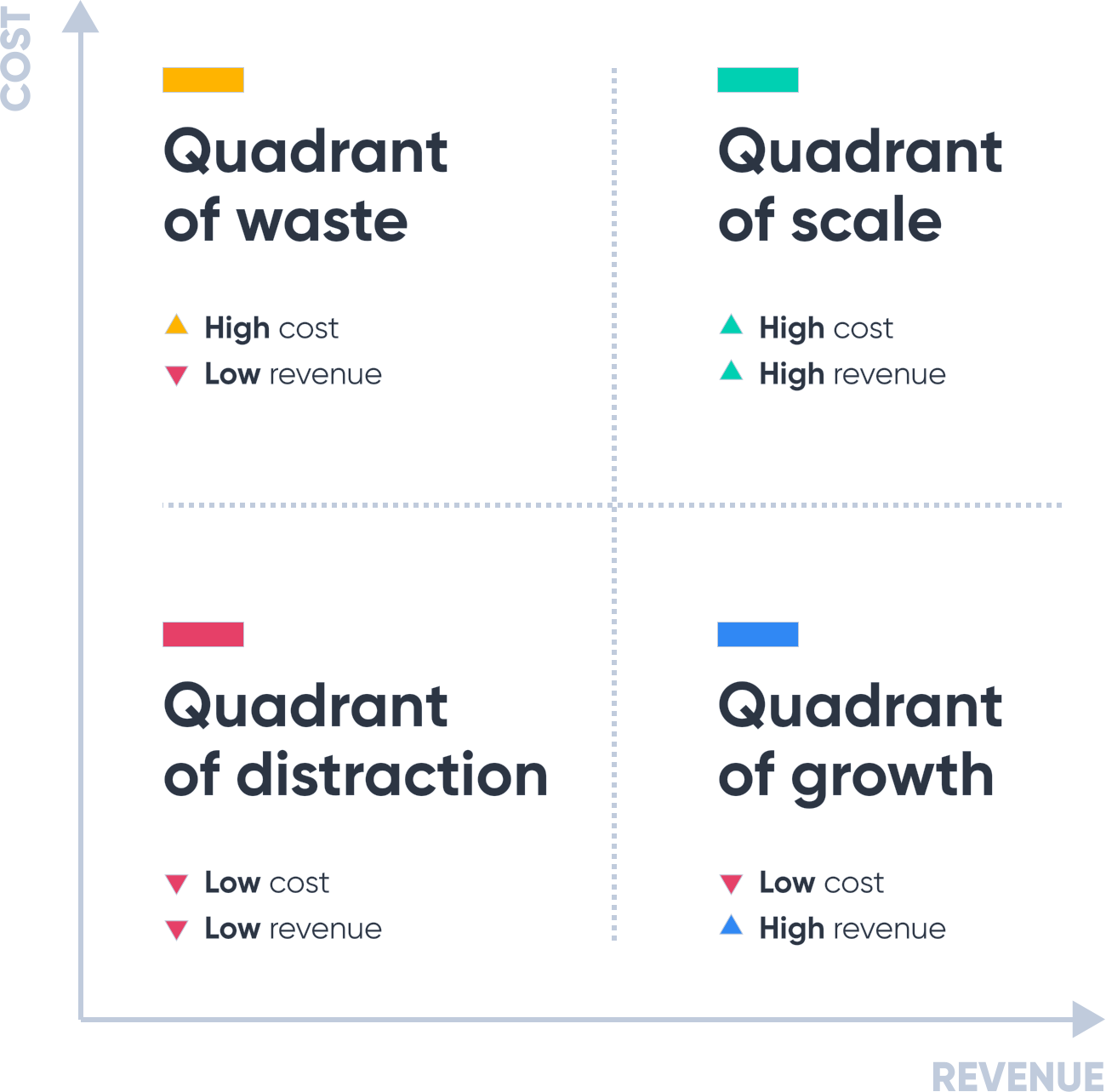
This year introduces the Singular ROI Quadrant, highlighting four classes of ad partners by contrasting ad cost to campaign ROI.

Marketers can now identify high-ROI but low-cost ad networks in the Quadrant of Growth, with networks like Reddit, Rokt, and Digital Turbine leading in specific regions.


Singular ROI Quadrant


Additionally, the ROI Index now includes a searchable view by geo and vertical, enabling marketers to find top-performing ad partners tailored to their unique growth needs.

View the entire report

See the full 2025 Singular ROI Index here.

AI-generated UGC is 60-70% awesome, 30-40% meh

Can you use AI-generated UGC for all your advertising needs? Not quite yet, according to Poolday CEO Alexei Chemenda. But it’s close, and it will work well for short-form mobile ads.

“If you compare it to where it was two years ago, it’s absolutely insane,” Chemenda told me in a recent Growth Masterminds podcast. “If you compare it to where the world wants it to be, it’s probably 60% there, 70% there. So it’s a great starting point, and with the proper setup, it’s certainly delivering results.”

So how can you kill it with AI-generated UGC?

Click play and keep scrolling:

AI-generated UGC: what are we talking about here?

AI user generated content (UGC) is already massive and growing. You’ve certainly seen it in mobile ads, even if you didn’t completely notice it or weren’t entirely sure if you were seeing a human or an AI-generated avatar. It often includes one or more of:

  • AI avatars, or virtual humans
  • Synthetic voices, often in multiple languages
  • Script generation, which can be of varying quality
  • Scene compositing, which is AI placing avatars in scenes like homes, cars, offices, etc.

Marketers use AI-generated UGC because it’s quick and cheap: you can make hundreds or even thousands of creative variations quickly: think hours, not days or weeks. It can help marketers localize content with AI-driven translation, and it’s great for rapid creative iteration to find the best-performing creative.

Currently Poolday has seen success in verticals such as:

  • Hypercasual games
  • RPGs and Match-3 games
  • Interactive story apps
  • Social casino games
  • E-commerce brands

The downside can be when you hit the 30-40% gap Chemenda mentioned: lower-quality platforms or even ambitious projects on top UGC generation tools risks introducing visual glitches. Translations might not be spot on, which could mean confusing, annoying, or even offending people in markets you’re trying to enter. And it’s not always clear whether AI-generated ads need to be disclosed, and if so, how.

But for small screens, much of that is less noticeable:

“ What’s important to remember is where that ad is gonna be displayed,” Chemenda says. “If it’s short form content displayed on mobile for users that scroll through, then maybe the details don’t matter as much.”

I’ve personally experienced that. One example: a little AI tool like a setting in my podcast production software that refocuses your eyes directly on the camera vantage point so it looks like you are looking directly at your audience, even if you were reading a script. Some of these things that work on a small screen in your hand don’t look amazing, necessarily, on a giant screen on the wall.

But on a small screen, no-one notices.

5 key factors that impact performance 

Performance advertisers understand: they’re not trying to make something that will hang in the Louvre. They want something that moves the needle in CTR and conversion rates.

Under that definition, it’s less about the artistic value or even how realistic the depiction of a human is than whether your creative generates ROAS.

For that, there are 5 key factors:

  1. Hook (the first few seconds)
  2. Actor
  3. Editing style (jump cuts, continuous, filter usage)
  4. Gameplay or product footage
  5. Music

Interestingly, the call to action isn’t that critical of a factor, Chemenda says, because most people don’t watch video right to the end. (An interesting item to consider testing: do high-quality users/players who monetize well correlate with people who watch the video to the end?)

You can play with more variables, he adds, but these are the critical ones. Starting with these 5 gives you the greatest chance of focusing on what matters most and ultimately landing on a keeper: a great ad that massively outperforms the others.

(Hint: this is the kind of creative you need to find before you can scale.) 

Finding your unicorn creative with AI-generated UGC

You have to kiss a lot of frogs to find a princess. Or a prince. Or even better a real live genuine unicorn creative: a 10X-better creative that you must find BEFORE scaling your ad spend.

The math is no different when the creative just happens to be AI-generated UGC.

Kiss a lot of frogs.

Make a lot of creative.

3 or 4 is not enough. Many marketers fail with AI UGC, Chemenda says, because they only test a handful of creatives and expect instant success. Instead, you need at least 30 to 40 creatives just to get out of the learning phase.

The upshot: success = volume + iteration.

Just like any other form of creative, winning with AI-generated UGC isn’t about nailing it in one shot … it’s about constant production, rapid iteration, and patient learning. (The patience is the hard part for me too!) This lets you find the messaging, actors, and hooks actually work.

One bright ray in a never-ending ocean of non-royal frogs: one creative can produce multiple winners:

“We built a creative in August ‘22, so it’s been two years and a half now, and that creative and its direct variations, meaning when we swap out the hook or we swap out the AI actor, that creative still remains the top spender for us,” Chemenda, who in addition to being the CEO of Poolday is also the founder of a mobile app publishing studio, says. “And we spend about $400,000 a month.”

That’s … impressive.

And annoying. 

Marketers who find a unicorn creative that just doesn’t ever seem to stop performing generally get annoyed because they keep failing to beat it. (But yeah: you gotta just keep trying!)

Killing creative fatigue

The absolute beauty of AI-generated UGC shines through when you’re starting to experience creative fatigue.

The scenario is that you’ve found an ad that really, really works, and you’ve milked it for all it’s gonna give you … and creative fatigue just starts slowly eroding your results. In the data, you see a long slow fade in performance from that creative.

What to do?

You don’t necessarily have to reinvent the world here and toss that entire once-great-performing creative into the trash can. Instead, swap out the actor. Clearly, something about the FORMAT of the ad and its MESSAGE worked … maybe a different visual delivery will reinvigorate this ad and return it to the glory days of ridiculously high performance.

Chemenda’s seen it work. Give it a shot.

But hey: AI-generated UGC is not a magic wand

Umm … yeah.

I like AI too, but it won’t do my entire job. And the same is true for you. Just like any other form of creative AI-generated UGC is hard work.

AI or not, good UGC takes planning, iteration, and storytelling. A human face alone isn’t enough. A great actor alone isn’t enough. You can’t just slap an actor onto a generic ad and call it a day. Messaging still matters. Story still matters. You still need an emotional hook. You still need a compelling narrative.

So invest the time you need in each of the 5 key factors, the hook, the actor, the editing style, the gameplay or product footage, and the music.

But make sure the core idea, the core story, is awesome. Or iterate until it is.

More in the full podcast!

Watch, listen, tell AI to summarize it for you, but get all the goodies in the full podcast. Here’s what you can expect:

  • 00:00 Introduction and Background
  • 00:42 Meet Alexei Chemenda: CEO of Poolday
  • 02:28 The Power of Curiosity in Marketing
  • 03:00 Generative AI for UGC: An Overview
  • 05:29 Testing and Iteration in AI UGC
  • 07:23 Success Stories and Best Practices
  • 11:46 Who Benefits Most from AI UGC?
  • 13:54 Creating Effective AI UGC Ads
  • 21:58 The Future of Personalized Advertising
  • 24:32 Ethics and Tagging in AI UGC
  • 27:14 Final Thoughts and Key Takeaways

Introducing Extract: modern data movement to unify your growth stack data

Modern business runs on data. This is not news to Singular customers, or any performance marketers. Data tells you which creative is awesome, which campaigns are working, which offers are compelling, which features drive engagement, which games and apps are growing. But the intriguing thing is that it’s not just data that drives growth, it’s data movement. Specifically, data movement that can unify your growth stack data.

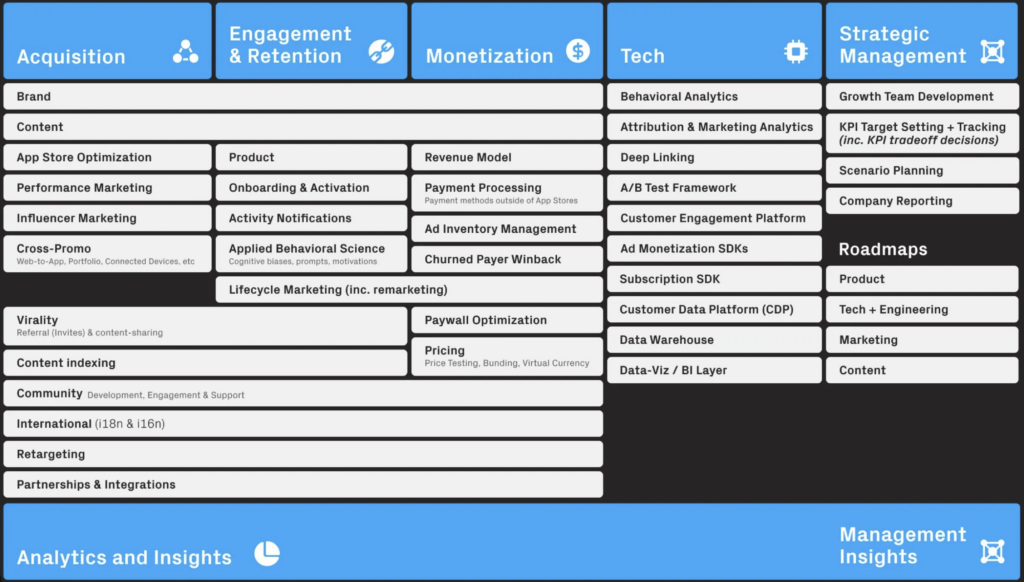
Data movement is essential because the modern growth stack is insane. We’re talking potentially 40 different components scattered across acquisition, engagement & retention, monetization, and insights & analytics.

This is just part of the mobile growth stack model that Phiture has highlighted:

growth stack data

To get the best insights, the highest-level marketers try to unify their growth stack data in their own BI systems. This unlocks next-level insights that go beyond specific campaigns, creative, or even specific apps to show you how bigger trends are impacting your growth, as well as very narrow and niche learnings that help you correlate paid advertising increases with organic uplift … and much more more. 

But it’s hard to do. It requires data movement, which today is complex and expensive, and it’s not easy to get all the data from all your growth stack tools so you can look at it all together.

So to make data movement better in every possible way, we’ve launched Extract.

And that will unlock significant new insights for growth.

Marketers depend on data movement

Let’s start here: why do you need data movement? Why does unifying your growth stack data matter?

The simple answer is that data movement is critical because so much of your key data is … elsewhere. And that unifying it will show you things that today you can only dream of.

Today, data critical to your growth is locked up in 20 different places. Places like …

  • App Store
  • Google Play
  • Ad networks (5, 10, maybe 30 of them)
  • Social media accounts
  • Web analytics
  • App analytics
  • CRM/engagement/messaging platforms
  • Subscription platforms
  • Increasingly, payment platforms
  • Consent management platforms
  • Creative analysis tools
  • Competitive intelligence tools
  • And yeah … mobile measurement partners, or MMPs like Singular

Singular centralizes much of that data for you, because we’ve been in this space for over a decade. 

We have the most connectors, bring in the most rich and detailed data from all your ad partners, have the best tools to normalize and standardize the industries’ 500 different ways to record view, click, and action data, and then combine it with your first-party engagement and conversion data so you get nice, simple, clean, and authoritative reports.

All of this requires data movement.

Data movement level 1: Singular’s ETL for marketers

As we’ve built all these connectors and processors, we also built a super-specialized marketing ETL tool

The goal: to get all the advertising and marketing data you need to your own data warehouse. If you’re just starting your growth journey, you might use Singular and just a few other data sources. But if you’re Rovio or Microsoft or Airbnb or Nike, you suck all the data you can down to your own BI systems to feed your own proprietary growth models.

Our existing marketing ETL tool is data movement too, but a very specialized form. 

ETL means extra, transform, and load, and it’s a methodology of getting data, changing it to fit a desired schema, and loading it into a data warehouse. ETL works well for targeted needs or verticals, like marketing, that have domain-specific data schemas and require customized processing. It works well when you need strong data governance as well. And ETL is good for cleaning data that you need to standardize across multiple inconsistent sources: when it’s done, you generally have exactly the data you expected, in specifically the format you demanded, that you can use instantly in precisely the way you wanted to.

So ETL has its place.

And Singular’s marketing ETL is a great tool for specific data movement needs.

But as marketers expand what they do, desire to add more data sources, and perhaps start to build more detailed models of advertising attribution and effectiveness that draw on multiple inconsistent data sources, there are broader needs. 

Those broader needs generally come with less structured data from more sources that don’t fit into a certain verticalized schema. So those broader needs demand a broader tool that is not specialized to marketing and advertising but can be used for literally any data, from anywhere, and send it to somewhere else. 

This kind of data doesn’t come from the ad platforms that Singular has primarily worked with. This kind of data comes from all the other components of your growth stack. And maybe even places you’ve never thought of as part of your growth stack, like the App Store. (But it is, right? You do a lot there to boost growth!) 

Or places like Google Analytics, which is increasingly important as web2app continues to grow and you need to connect growth in web with growth in mobile.

That’s why we built Extract.

Extract is a radically efficient, super reliable, and suprisingly cost effective way to move data from anywhere to anywhere. It’s a reinvention of data movement platforms: beautifully simple, transparent, and fun to use. 

(Yep, fun. Extract has already won customers from legacy data movement platforms like the billion-dollar data platform Fivetran, and that’s what they tell us. Hey … they’re data nerds.)

Data movement level 2: Extract will unify your growth stack data

ELT is a broader, more general data movement tool. It’s faster and more scalable. And it provides all the data from a source that it’s possible to get, not the subset that an ETL tool might grab. 

Extracting, loading, and leaving transforming for later fits better into modern data cloud warehouses, is perfectly suited to big data and high volume ingestion, and lends itself to flexible ad hoc analysis at any time in the future. 

(This “ad hoc” piece is important because you don’t necessarily instantly know exactly how you’ll use all the data you’re gathering right now. But you’re collecting it all because a long and painful experience has taught you that in the future, you’ll have questions to answer that will require different data points, not just the bits that you might be using today.)

Extract means you can vastly expand the kinds and quantities of data you ingest into your BI systems.

In other words, you can take all the data you get from Singular, match it up with all the other data from all the other elements of your growth stack, and look deeper for patterns in growth and decline.

This unifies your growth stack data.

And that’s critical to drive next-level growth.

The good news about Extract is that because Singular has more than a decade of data movement history for the largest companies on the planet, we were able to spectacularly reengineer what a next-gen data movement platform should look like, accomplish, and cost.

Extract is:

  • 17X more efficient than leading data movement companies
  • Half the cost of legacy providers
  • Massively transparent
  • Incredibly easy to use

Unifying growth stack data via Extract unlocks far more insights

Correlating different data sets across tools and platforms lets you go beyond surface metrics to understand why performance is up or down and where to double down on spend or fix an issue. This is where the best-performing marketers gain a massive strategic edge over competitors.

Here are a few examples:

  1. App Store/Google Play
    Get all your data and compare it with growth results. Are reviews correlated with growth? Are app crashes connected to engagement levels? How do marketing campaigns correlate with search term conversion rates? Are different custom product pages correlated with more or less growth for specific marketing campaigns? Do advertising surges relate to app impressions in the store?
  2. Subscription analytics
    Do subscription renewals correlate to original user sources? Are conversions higher from owned than paid sources? How do subscription sign-ups relate to your first-party usage and engagement data?
  3. In-app analytics
    How do overall engagement levels correlate with CTR in ad campaigns? Does existing user engagement correlate with shifts in download activity, suggesting some significant change in the broader market?
  4. Advertising platform data
    Does your TikTok hook rate have any correlation with your D3 purchase numbers or D7 LTV?
  5. Creative analytics tools
    Does video ad length correlate to in-app purchase activity? Do creative themes or elements correlate with LTV? Do any elements correspond to retention?
  6. Competitive intelligence tools
    How does your download growth correlate to competitors? How does your growth (or lack thereof) correlate to overall download growth or drops? Are there vertical-specific factors driving growth or contraction in your space? Are there global factors impacting your vertical?
  7. Web analytics
    How are your SEO activities impacting your install volume? What can you learn by comparing your web2app landing page visits with your app installs, subscription sign-ups, or other key post-install activities?
  8. Social activity
    Is growing your owned social media presence related to app install activity? Is there a causal relationship? If so, which causes which? And how does general noise on social media channels impact growth … in other words, are you generating buzz, digital word of mouth, and is that driving action?

I could go on, but you get the point. 

Ingesting all the data that is yours from all the various growth stack tools you use is likely to unlock new levels of insight into what’s happening with your apps and your marketing. Plus, it can show all that relates to regional, global, or vertical-specific trends.

As an added benefit, it’s also likely to be able to form the basis for powerful MMM or incrementality models if you decide to run those yourself.

Why yes, Extract does more

Just to be clear, Exact is not just for marketers. Pretty much any size company has data movement needs, and Extract will work for many of them.

But we think many existing Singular customers in the mobile growth and performance marketing spaces have a particular need for Extract, and could start using it almost instantly.

Check out our launch post on the Extract blog by Singular CEO Gadi Eliashiv. That will give you many more details about what Extract does and what makes it special.

Extract does wonderful things for marketers, and it’s very easy to take it for a spin.

Because …

Marketers: you can try Extract totally for free

If you’re interested in a radically efficient, flexible, customizable, and easy-to-use data movement platform to unify your growth stack, you don’t need authorization from an executive. You don’t need a contract. You don’t even need a credit card.

Because the first tier of Extract is completely free.

Yep, just like Singular’s free tier.

But maybe even better. Because Extract is so efficient and so cost-effective that $0/month gets you up to 1 million monthly rows. And a lot more.

Here’s what’s in the Extract free tier:

  • 1 million monthly rows
  • Unlimited sources & destinations
  • Up to 5 live connections
  • Hourly syncs

If you need more, like 100 million monthly rows, pricing starts at just $15/month. 

Marketers like you are using Extract already

Just so you know, we started working on Extract over two years ago. We took our time crafting a super-efficient product. About half a year ago, we started onboarding paying customers in a large private beta.

That list includes names you’ll recognize, like:

  • WB Games
  • Miniclip
  • Scopely
  • EA
  • Playtika
  • SciPlay
  • Cambly
  • King

There’s more: over 20 customers have been using Extract for months. That means it’s gone through massive stress testing before officially launching. And that means you can trust Extract, just like Singular, for your biggest and most challenging data movement needs.

To get started, talk to your Singular rep.

Or just sign up and play for free.

Singular is the global best MMP for 2nd year running, say 1,636 marketers

Once again, Singular has been rated the global best MMP. Thank you Singular customers. And thank you mobile marketers all around the world. According to independent reporting and feedback from 1,636 marketers at G2, Singular is the best MMP on the planet for the second year running.

Global best MMP

Last year 1,434 marketers reviewed MMPs such as:

  • Singular
  • Adjust
  • AppsFlyer
  • Branch
global best MMP

This year 1,636 marketers rated, ranked, and reviewed MMPs, and the results are clear. Singular ranked as the global best MMP by coming in first or tied for first in 21 different aspects of our marketing and measurement platform:

  1. Ease of admin
  2. Ease of set-up
  3. Ease of use
  4. Meets requirements
  5. Quality of support
  6. Being a good partner
  7. Likelihood to recommend
  8. Analytics dashboard
  9. Cross-channel insights
  10. Cross-platform attribution
  11. Custom dashboards
  12. Data segmentation
  13. Fraud detection
  14. Post-fraud attribution
  15. Retention metrics
  16. Validation rules
  17. Attribution
  18. Conversions
  19. Custom event tracking
  20. Dashboard
  21. User segmentation

All of the ratings are fresh, having been collected as of March 3, 2025.

Singular, the easy choice

It’s particularly gratifying to see the first 3 awards for ease of set-up, ease of use, and ease of admin. 

Singular has long been the MMP of choice for the largest and most sophisticated customers who are spending hundreds of millions of dollars annually and have the most demanding data, uptime, and attribution standards. But our focus over the past few years on midmarket and the entry-level MMP user have led us to make innumerable changes around being easier to use.

Our team has invested huge resources and time to ensure that starting up with Singular is super-easy, including on the completely free starter tier.

We’ve literally gone from a complex we’ll-onboard-you process to a super-simple self-serve process in a very short period of time.

That’s great for attribution starters, but the spillover benefits are for everyone, including enterprise customers. Easier to use for 1 is easier to use for all.

Global best MMP in support

But just because you can do it yourself doesn’t mean you’re left to your own devices. Singular’s global best MMP support is still and will forever be a key distinguishing factor.

“Quality of Support” is 1 of the metrics that we have the most separation from competitors in:

  • Singular scored 93%
  • Adjust scored 79%
  • AppsFlyer scored 86%
  • Branch scored 81%

(And those numbers, I should add, were probably mostly compiled before at least 2 of our competitors laid off significant numbers of staff.)

Singular support regularly comes up when we talk to our customers. Associates commonly go the extra mile, like 1 who helped a customer on Super Bowl Sunday with an issue that turned out to be caused by an external factor. The reality is that modern digital marketing is incredibly complex, and while Singular is a pretty good big red EASY button, connecting all the data pipes and making everything work together sometimes goes better when you have someone smart and friendly to talk to.

Global best MMP in cross-platform marketing measurement

Another great achievement is top ranking in 2 key areas:

  • Cross-channel insights
  • Cross-platform attribution

This is so critical right now. So many customers are adopting web2app journeys and funnels for multiple different reasons. Others are serving customers on not just mobile and desktop but TV and console. Cross-device attribution is absolutely critical, and so is an overall integrated attribution solution that includes PC and Console analytics as well as CTV attribution.

People are everywhere today. The number of devices people own has jumped 63% in the U.S. and 68% in Europe in just the last 5 years. 

So your marketing platform needs needs needs to be able to account for that explosion of digital activity. 

Oh, and while we’re at it, let’s just throw in web attribution, which is also increasingly important as glue that ties together complex user journeys.

Singular: the MMP customers are most likely to recommend

It’s great and maybe even essential to be top-ranked in the core things we do, including attribution, conversion measurement, retention analytics, providing a great dashboard, enabling super-customized data views, and all the rest.

But perhaps the most important metric is this: likeliness to recommend.

So we’re super-pumped to see that Singular ranked tops in that category.

I don’t know about you, but I make pretty sure something is awesome before I recommend it to my friends. I don’t want them to have a bad experience thanks to my advice: it reflects poorly on me.

I think most of you are like that too.

So it’s great to see Singular get top marks, higher than any other MMP, for being the marketing measurement platform that digital marketing pros are the most likely to recommend. That’s a huge part of being the global best MMP, and we’re super-happy to see it.

See all the rankings for yourself

Don’t take our word for it for it.

Check out the G2 results for yourself right here.

Most importantly, perhaps, have a chat with us. Even better, upgrade your MMP to Singular. Over 1,600 marketers say you’ll be glad you did.

Mobile game ad creative that crushes: the 2-second rule, 5% insanity, and more

Mobile game ad creative is just about the single most important thing a growth marketer in mobile games needs to get right. There’s a lot of potential strategies: build 10,000 creatives with generative AI and throw them at the wall to see what will stick, UGC, playables, gameplay, character-focused ads, even fake ads.

But what’s going to work best?

I recently took 30 minutes with Jesse Lempiäinen (co-founder of Geeklab, which works with games from Supercell, Rovio, Wooga, A Thinking Ape, and many more) and Niels Beenen from Singular. Our goal: unpack what’s working now for mobile game ad creative.

And to see where creative is heading in 2025, plus how marketers can break through the noise.

Hit play, subscribe to Growth Masterminds, and keep scrolling for the highlights …

Gate videos: king of the hill for mobile game ad creative?

They may not fit your game, but gated creatives are killing it. Join Clash 3D is an example of a game with this kind of play, but you sometimes see similar creatives for 4X strategy games, idle merge games, or even a tower defense title.

“ Creative with the gates are, at this very moment as we’re recording this, more or less the king of the hill,” says Jesse Lempiäinen.

What’s the appeal?

They blend simplicity, clarity, and satisfying progression, which is probably why Jesse called them “the king of the hill” in today’s mobile game ad creative formats. 

Here’s an example in an ad for Evony: The King’s Return …

mobile game ad creative


Evidence in Jesse’s favor: even when I click the rewarded ad button to get some goodies in my favorite game with zero intention of actually playing the playable ad … if it’s a gated creative, I usually do play it.

You need a bit of skill, you have a bit of fun, and there’s a sense of building or progressing, which is why you see this so often. And the playable mechanic is super-simple: slide from side to side.

UGC is evolving: fakes to feeds?

There’s a shift from fake UGC in mobile ad creative. 

Where maybe you might have had an AI-generated facecam overlay on top of gameplay, real influencer-led content that looks native to platforms like TikTok is increasingly winning, says Jesse.

“Brawl Stars had some creatives running where there was this couple of kids doing some fun stuff that went viral on TikTok on college campuses,” Lempiäinen says. “They were actually partnering up with them, making UGC content with real influencers so that it actually looks and feels like it’s part of the feed, right?”

I get the appeal.

best ads mobile games


After having seen too many obviously fake videos from bad actors telling me why I should download this great new real money gaming app that will totally put $100 in my account right now so I can afford the bill at the restaurant for the meal I’ve already eaten … yeah.

Real people doing real stuff that is really interesting: that will always be attractive. And real people saying things real people would actually say … that’s kinda priceless. Sorry, marketers, when we write dialog for real or virtual actors in our ads, we usually suck at it.

That said …

I personally don’t think we’ll stop seeing the AI-generated stuff in mobile game ad creative: it’s getting better and better and it’s just too easy and too cheap to avoid.

But at the high end for game publishers that can afford it … it’s hard to beat real.

Super-effective mobile ad creative: Real IP, real emotion, real differentiation

Look, it’s obvious. 

AI allows massive mass production of creatives. What do you get? Market saturation. Use it wisely, you’ll probably get some great results. Spray and pray, you’ll probably strike out.

What’s working? 

Strong IP, emotional resonance, and recognizable characters are now even more critical to stand out. Think The Last Of Us star Pedro Pascal in ads for Metacore game Merge Mansion.

Here, he finally meets the iconic Merge Mansion granny. Whatever she’s hiding, Pascal looks likely to drag it out of her:

The Last Of Us star Pedro Pascal in ads for Metacore game Merge Mansion


That brings together recognizable game IP with a global star and an intriguing story.

2 seconds to win: mobile game ad creative has to catch people instantly

The creative hook is everything.

You have about 2 seconds to grab people’s attention, and that’s not a lot of time. This is the TikTok generation, after all.

“In a very crowded landscape right now, you see that the first 2 seconds of that video that you’re launching in front of your users are really going to suck them in,” says Singular’s Niels Beenen.

Catch your audience instantly with a creative hook that really works, or our thumbs start twitching. There’s more dopamine to be unleashed, and our little drug-addicted brains aren’t going to waste time on content that doesn’t deliver the thrills we demand.

You need that hook … so you can stop that thumb … so you can get the click … so that you can get the install.

Only the install matters, and actually all that matters is what happens after the install, but if you don’t have the hook and you don’t win the 2 seconds of attention that buys you more seconds, you won’t get the click and you won’t get the install.

Testing (and when the CTO is the most creative person in the company)

How much should you spend on testing?

Some game advertisers spend just 10% of their budget on testing. But there is a scenario in which game advertisers can consider spending between huge amounts of money — 30% to 50% of their budget — on creative testing, depending on their strategy and goals.

You can do that, and you can only do that, when the ads you’re testing are good enough that you’re not significantly behind when running them. In other words, they’re not unicorn creatives that are 10Xing or 100Xing everything else. But they are still revenue positive.

The ultimate goal, however, is the unicorn creative.

Which, in Jesse’s case, his CTO once stumbled upon:

“ Our CTO actually came up with this idea that, you know, why don’t we just like mock up an iMessage thing and have a conversation between a wife and a husband about like, he should exercise more, and the game features fitness and health as well as gaming.”

The problem?

It’s so good they can’t beat it.

“And our CTO can laugh every time, knowing that he’s actually the most creative mind in the company.”

When you find your unicorn creative, you can then throw 70-90% of your budget behind it, reap the rewards, and keep testing for something that will, eventually, beat your best ad.

Mobile game ad creative: the 5% insanity rule

The problem is that it’s so hard to beat unicorn creatives. And that after a while, even with AI, and even with multiple smart, creative minds banging on the same problem again and again and again, it’s hard to come up with something truly innovative, new, creative … even disruptive.

So you have to go insane.

Yeah, literally.

A marketer I recently chatted with solved the creativity problem with the 5% insanity rule.

It’s kind of a crazy slice of your mobile game ad creative budget that is reserved for going totally off the rails. It’s your license to get weird. True, most of these experiments will crash and burn in beautiful chaos, but every once in a while, 1 will hit pay dirt. And then you’ll deliver a breakout creative that literally no one saw coming. 

The marketers I talked to let his 5-year-old design an ad. And the kid hit a home run.

Creative is hard: have some fun

Creative is hard. Have some fun to make it easier. 

Start by watching this whole episode. There’s much more in here, including more on gate creatives, a new metric for marketing success (hint: multiply installs per mille by day-one retention), emotion, logic, ad iteration, and transmedia.

  • 00:00 Introduction to Growth Masterminds
  • 00:51 Current Trends in Game Marketing
  • 02:18 The Role of AI in Creative Development
  • 03:37 Influencer and UGC Strategies
  • 06:38 Challenges and Successes in Creative Marketing
  • 11:55 The Future of Game Marketing
  • 17:38 Innovative Approaches and Final Thoughts

Apple Search Ads adds support for SKAdNetwork, AdAttributionKit

Apple announced today that Apple Search Ads will be adding support for SKAdNetwork and AdAttributionKit, Apple’s new name for SKAdNetwork, on April 10. 

This is big news. 

Despite Apple launching SKAN almost 6 years ago and making it relevant for app marketers by introducing App Tracking Transparency 3 years ago in iOS 14.5, Apple Search Ads has until now only used the Apple Ads Attribution API to attribute app downloads resulting from its advertising campaigns. A core reason: Apple has maintained that SKAN is the way to accomplish privacy-safe mobile attribution when multiple parties are involved, including a third-party ad network, but Apple has first-party data rights with its own device and software users.

Now Apple is eating its own dogfood, in a sense, and enabling ASA measurement with the same yardstick it provides for the industry at large.

What we know so far:

  • Adservices attribution (Apple Ads Attribution API) is not going away; Apple is adding SKAN/AAK
  • SKAN support will go live on April 10, but it will take some time for postbacks to go live of course
  • Apple now calls SKAdNetwork by the new name AdAttributionKit
  • However, initial support is only for SKAN versions 1 through 3
  • Support for the newest version of AAK (and presumably SKAN 4) will come later
  • Apple will not forward SKAN postbacks to MMPs as most other networks do
  • To see ASA SKAN postbacks in your MMP data, add an endpoint for Singular (supported in SKAN 3 and above)
  • Apple is adding basic data mapping: associating the 4 placements that ASA supports (Search results, Search tab, Today tab, App listing pages)
  • Singular will be able to support placement ROI because this placement is also available in the ASA campaign management API
  • All ad platforms can register with AdAttributionKit to enable measurement on ASA

While there might be less hype and interest in SKAN than a year or two ago, SKAN and AAK is still a big factor in deterministic marketing measurement on iOS. In fact, Apple said today that SKAN covers 77% of all referral-based conversions to the App Store.

So why is Apple doing this?

Likely a big part of the reason is that antitrust authorities around the world have investigated whether Apple’s implementation of ATT violates antitrust laws. 

In fact, France just fined Apple $162 million, saying that App Tracking Transparency privileges Apple and punishes third-party developers, especially smaller ones. In addition, in February, Germany’s Federal Cartel Office expressed concerns that Apple’s ATT framework could violate competition laws … that ATT could constitute “self-preferencing,” since Apple’s own services have not been subject to the same tracking restrictions as third-party developers.

Whatever the reason, it’s a major positive sign.

This is relatively breaking news: expect updates and further insight here as we learn more.

Subscription apps: 17 things I learned from RevenueCat’s big new report

Only a tiny percentage of under 4% of apps offer subscriptions, according to Statista. Yet that tiny fraction of subscription apps take in almost 55% of all mobile revenue. Clearly, subscription apps are doing something right.

Of course, this stat doesn’t mean all this revenue is coming from subscriptions. Many of these apps will still make massive bank on IAPs and ads. But subscriptions are a big part of it, which is 1 of the reasons why so many apps are investing heavily in building, enhancing, and marketing their subscription offerings.

Probably the best source of data on subscription apps is RevenueCat’s annual report.

Here’s what I found most interesting in that massive 262-page report

AI & innovation

1. AI is the hot category today. 

AI apps are making $0.63 per install after 2 months … double the media return and equalling Health & Fitness apps.

Time to start some AI subscription apps? Well, there’s a lot out there now. The good news is that wrapper apps that essentially use OpenAI or Perplexity to deliver their insights in a specific vertical still have a chance of success.

What’s a publisher to do?

Make an AI productivity app like a smart writing assistant  … you’ll probably out-earn a traditional to-do list app purely through higher perceived value.

Retention in subscription apps

2. Retention is hard but lucrative

Keeping users subscribed long-term is increasingly difficult. You knew that already. But, it’s incredibly rewarding if done right. And yeah, you knew that too.

Here’s the insight: don’t over-reach with pricing. Most apps with cheap annual plans retain 36% of users after a year vs. 6.7% for high-priced monthly plans. A $5/month meditation app retains more users than a $15/month version.

Do the math to decide which way to go for you.

(Note: see #12 below for additional context.)

4. A third cancel in the first month

30% of annual subscriptions cancel in the very first month. They’re here for the trial, out for the long haul. 

Early retention is critical. If your language learning app doesn’t engage users in week 1, they probably won’t stick around for renewal.

Monetization strategy for subscription apps

5. Diversifying revenue is critical

Diversifying revenue streams is becoming the new normal among apps that make money. 35% of subscription apps now use hybrid monetization: some combination of …

  • Subscriptions
  • IAPs
  • Ads
  • Lifetime purchases

For gaming, that percentage is much higher at 61.7%.

“Hybrid models allow apps to monetize different user segments more effectively, reducing churn and improving retention.”

Even so, about ⅔ of all subscription apps across a wide range of categories still only have subscription revenue. 1 reason: advertising takes significant volume to pay off. And if you built to optimize for subscriptions, it may not be easy to add IAPs into the mix.

6. Consumables are hot along with subscriptions

Most categories rely heavily on subscriptions, but in Social & Lifestyle, nearly 20% of apps offer subscriptions + consumables.

For your dating app you might have a monthly subscription but also offer separate “boost” purchases for higher visibility or more matches.

7. Very few subscription apps use in-app offers

Only 13% of apps use in-app offers, like a time-limited discount or an upsell for premium features. Of those that do, Health & Fitness apps lead at 22% while Gaming apps the least at 6.6%.

What to do? 

You can test it, but I’ll say this much: my favorite game has effectively taught me never to buy anything that’s not on sale … because it’ll be cheaper eventually. So be advised that when you start discounting … you might not be able to stop.

8. Trials are a now or (almost) never business

80% of trial starts happen on day 1. 

If they don’t happen on day 1, they’re extremely unlikely to ever happen (just think how hard it is to get someone back in your app if they’re not active). 

So don’t bury the paywall: showing it during onboarding is critical.

Revenue distribution: the gap is growing

9. Even most of the top apps are commercial failures

There’s a widening gap between top performers and average apps in both early and long-term revenue. The top 5% of new subscription apps make just $8,888 after one year. Not very lucky 8s!

Sure, that’s over 400x more than the bottom 25% which make just $19, but it’s not even a hobby business for a single developer. The true hits that move the needle for app publishers are a fraction of the top 1%.

10. North America is tops in revenue, followed by APAC

Not surprisingly, North America has the highest 60-day revenue per install at $0.57. APAC is not far behind at $0.42.

As always, you have to balance RPI with CPI; acquisition with monetization.

11. Hard payways work hard

Subscription apps with hard paywalls have 8x higher RPI than freemium models after 14 days. So going freemium or soft isn’t even in the same ballpark, in terms of revenue.

8X!

12. Higher price points outperform

Often, you’ll see seemingly contradictory data and/or advice. 

For example, in #2 above, cheaper apps have higher retention. But also, RevenueCat data shows that apps with higher price points outperform in revenue per install at both day 14 and day 60.

What’s going on?

Cheaper apps can have higher retention, and more expensive apps can make more money per user, depending on the specific numbers. But it also matters when you measure: after a couple of weeks or months, or after an annual renewal.

So … YMMV.

Model different options. Challenge the data. And test.

12. Business apps make bank

Realized LTV after 1 month for top Business apps reaches over $52 per payer. There’s a big difference between top apps and bottom ones though: less successful Business apps make under $15 per user.

2 other categories with widely diverging income profiles:

  • Education
  • Health & Fitness

Conversion for subscription apps

13. Even the best apps struggle to convert

Even the best subscription apps struggle to get people to start a trial subscription. The trial start rate for the top 10% of apps is just 20.3%.

The really bad news?

That’s more than 3x better than the median subscriptions apps, which convert just 6.2% of users to trials.

14. Pricier apps convert more trials than cheaper

Apps with high-priced subscriptions have higher trial conversion rates at almost 10% than low-priced ones at just 4.3%. 

Possible explanation: people may be more serious about converting when downloading a $19/month AI design tool than a $1/month meditation app. Also possible: higher price is a signal of higher value.

15. Long trials convert better than short trials

Plenty of things in mobile monetization are counterintuitive. For me this is one: longer trial durations of 2 to 4 weeks yield the best median conversion at 45.7%. Short trials under 4 days are the worst at under 27%.

The long trial clearly works better at getting people in the habit of using the app, while I would have thought it would give people more time to forget about it.

Churn in subscription apps

16. Retention is suffering this year

Understanding when users cancel is key to reducing early drop-offs and improving LTV. Churn hits fastest in the first days of trials, especially 3 to 7-day durations.

Plus, almost 30% of annual subscriptions are canceled in the first month.

More bad news: retention was down across the board:

  • Yearly plans: 47.1% to 44.1%
  • Monthly plans: 18.8% to 17%
  • Weekly plans: 4.2% to 3.4%

Clearly, yearly plans are where it’s at: “Despite this drop, annual subscribers still outperform other plan durations by a wide margin.”

Trial strategy

17. Pure trials are the most rare trials

Whether you offer a trial, and how long it lasts, heavily influences conversion outcomes. Subscription apps can offer pure trials (everything is in the trial) to no trial (buy now or drop out) or mixed trials (some features available, others behind a trial gate).

Gaming apps skew toward pure trial strategy, while Health & Fitness apps favor mixed trial approaches, as do Travel apps.

Subscriptions are getting tougher

Subscriptions are super popular among app publishers for obvious reasons. But hybrid monetization models are key to hit every price segment, monetize all users, and reduce churn. 

People are willing to pay for value, but there’s also a push to reduce how much they’re spending on all subscriptions across music, TV, apps, and other categories.

Only the winners will survive.