Table of contents
- Transportation, Food Delivery, & On-demand What Customers Want
- TLDR: Growth in 2025
- Surveying customers and prospects
- Frequency: How often people use on-demand services
- Products and services: What people order
- Value: How much people spend
- Loyalty: What makes consumers likely to switch?
- Partner contributions
Transportation, Food Delivery,
& On-demand
What Customers Want
TLDR: Growth in 2025
2025 is shaping up to be a monster year for on-demand services and products, particularly transportation categories like ride-sharing and the food and meal delivery subverticals. So we surveyed consumers and asked growth experts for their top insights for one of the fastest-growing spaces: on-demand services.
Here’s what you’ll find in this report:
- Order frequency
- Most active customer segments
- Most loyal customer segments
- Best customer acquisition targets
- Categories that are winning
- Categories that are still developing
- How much people spend
- Why people leave on-demand services
- What people hate about on-demand services
- The best ways to attract new on-demand customers
- How to message and notify on-demand customers most effectively
Surveying customers and prospects
The on-demand space is growing incredibly fast in two key sectors right now: transportation (including ride-sharing, bikes, scooters, and more), and food delivery: meals and groceries. Just one of those sectors, transportation, grossed $185 billion last year and is forecast to rocket up to $771 billion by 2032: a 17% compound annual growth rate. The other, on-demand delivery of food, meals, and consumer goods is forecast to grow globally 21% annually for the next four years.
What’s more, delivery via fast (and cheap) drones from massive e-commerce players like Amazon could turbo-boost that growth. Amazon alone has a 500 million package delivery goal by 2030 and is already in operation in five areas.
But what do consumers think about all this? And what does that tell you about how to win in 2025?
To find out, we surveyed a representative sample of 750 smartphone-owning American consumers.
We defined “on-demand” as things and services you order for immediate or near-immediate delivery, including food delivery, transportation, and ride-sharing, plus e-commerce categories like gifts and flowers, and even newer and still-nascent categories in the on-demand space such as home care, pet care, and health care.
Our goal: to learn. We wanted to know …
- How often people use on-demand apps
- How many on-demand services they regularly use
- How loyal they are
- How much they spend
- What might make them shift to other options
- What they don’t like about on-demand services
- And how on-demand apps and services should contact and connect with them
The results show how on-demand services should approach growth, user acquisition, and customer retention in 2025.
Frequency: How often people use on-demand services
Americans are addicted to on-demand apps and services, and the more apps they have from on-demand companies, the more frequently they use them.
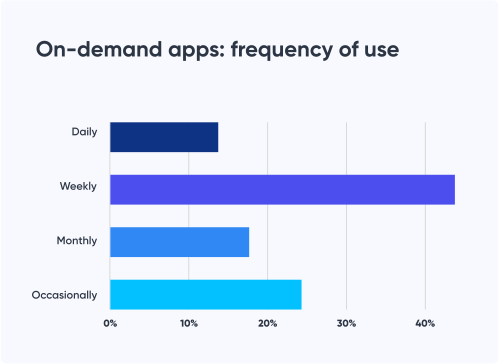
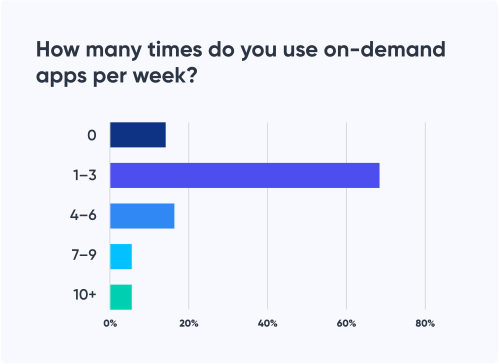
Weekly is most common, with a frequency of one to three times per week. Very few Americans do NOT use on-demand apps or services: only 12% say they don’t order anything in a typical week.
57% of Americans use on-demand services at least weekly
- Of those who use on-demand apps weekly, 67.5% use them 1 to 3 times per week
- Less than 12% say they order stuff 0 times in an average week
- 8%, almost 1 in 10, say they order on-demand products and services at least 7 times per week
Every age uses on-demand apps, but young adults are the most avid consumers of immediately deliverable goods and services.
25 to 34-year-olds are the most loyal on-demand customers
- 19% order daily
- 49% order weekly
- 18 to 24-year-olds and 35 to 44 are not far behind
Unsurprisingly, if you have downloaded more on-demand apps, you will likely use them frequently.
- Users with more on-demand apps are 68% more likely to use them frequently (4-6 times a week); having more apps strongly correlates with higher usage frequency
- For user acquisition, target people who already have on-demand apps
Products and services: What people order
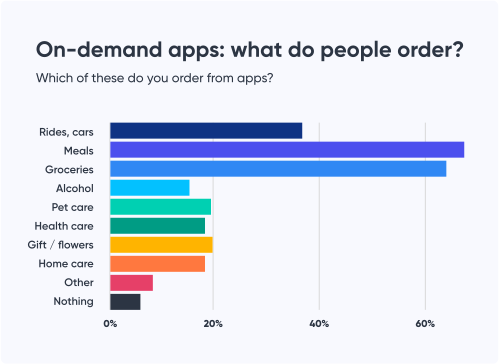
Food, whether ready to eat or ready to cook, is the most common on-demand category for Americans. Meals and groceries outpace rides, cars, bikes and scooters.
Alcohol, pet and health care, gifts, and home care are still young categories for on-demand: under 20% of Americans have ordered them via on-demand apps.
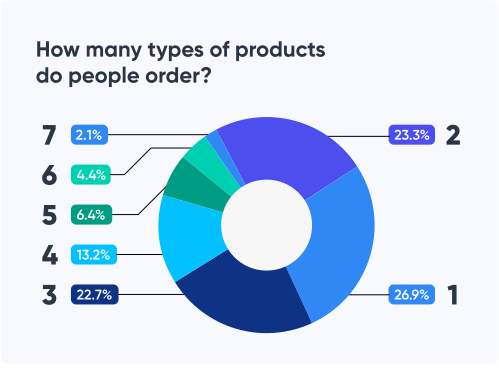
The average American orders 2.75 different types of goods and services from on-demand apps, with just over a quarter only ordering one type of thing.
- Average American orders 2.75 categories of on-demand goods or services
- 27% of people only order one type of thing from on-demand services
- 23.3% order 2 categories of things
- 22.7% order 3
- 2.1% order 7 or more (!!!)
The data indicates that on-demand is still early in its evolution and uptake, and therefore likely has a long growth ramp still remaining.
- People who start using on-demand apps tend to expand to other categories
- Meals and groceries lead, followed by transportation
- Every other category is still niche
- Most people, 73%, order between 1 and 3 categories of products
Value: How much people spend

Most on-demand purchases are low to medium value, with the most common purchase range from $25 to $50. Under 20% of purchases are over $75.
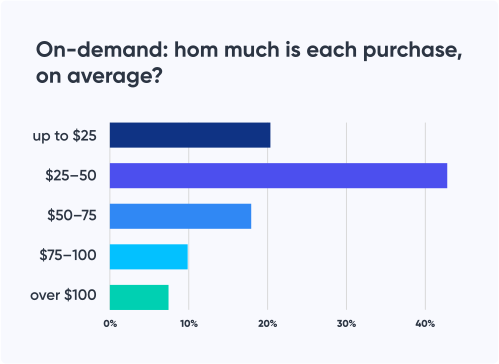
67% of on-demand purchases are below $50. This is expected since on-demand purchases are typically spur-of-the-moment decisions, but it may increase as other categories such as alcohol, gifts, pet care, and home care gain more momentum.
Loyalty: What makes consumers likely to switch?

Most on-demand consumers are not very loyal. They will switch for cheaper prices, primarily, but also different products. Higher prices, poor delivery, and poor quality are the most common factors influencing consumers likelihood to switch to another service.
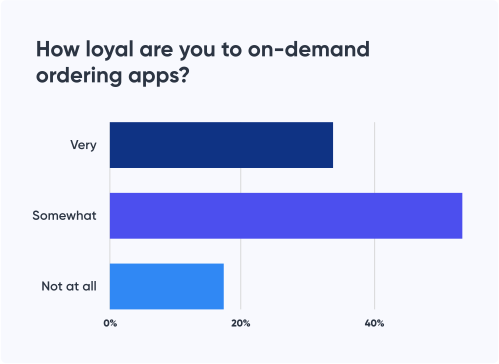
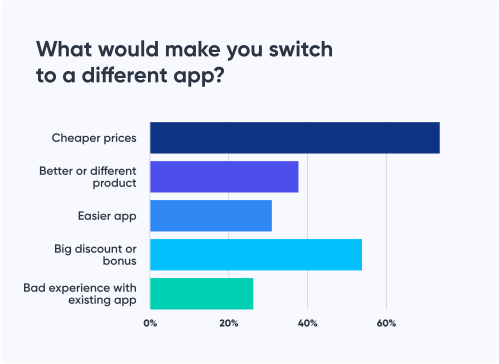
In the same vein, high prices, poor delivery experiences, and bad products or services are the key risk factors for on-demand companies to keep happy, satisfied, and loyal customers.
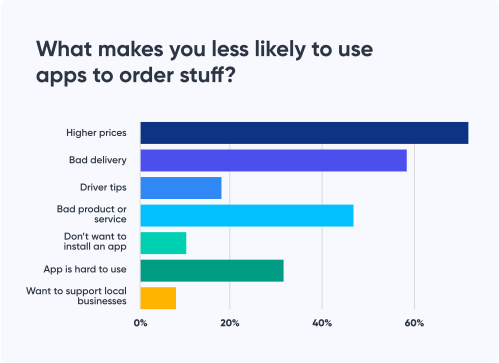
This provides important insights on how to attract new users and customers to your on-demand app, as well as how to keep your existing customers.
- Cheaper prices are the biggest draw to switch apps
- A loyalty program that provides occasional rewards will boost customer retention and combat the urge to jump ship for a one-off cheaper price elsewhere
- Consumers are very willing to install new apps: apps being hard to use is a 3X bigger blocker than consumers not wanting to install yet another app
- 49% of somewhat loyal users would switch for a better or different product
- 31% of even “very loyal” users would switch for cheaper prices
Partner contributions
We asked a number of partners to contribute their insights to growth, analytics, and retention in the on-demand space.

Driving engagement to make the most of your UA investment
Even after successfully acquiring users through discounts or first-time purchase incentives, churn remains a significant issue for on-demand apps, particularly rideshare or intercity transport apps. Think of UA like the first checkpoint, while retargeting gets them to their destination. Many users drop off soon after installing the app, often right after registration or account confirmation. To combat this, retargeting campaigns deliver personalized reminders to highlight the app’s value and drive users toward making their first purchase or using the app more frequently.
Often users sign up but don’t make their first purchase, or they make one order and don’t return. For intercity transport apps, retargeting strategies that kick in right after registration or first purchase can help reduce this churn. By sending targeted messages with personalized offers or highlighting benefits like convenience and affordability, you can guide new installers toward repeat orders.
This is especially important in high-growth regions like Latin America, MENA, and APAC, where transport app usage is high, but churn remains a challenge.
These areas offer lower CPI, making user acquisition relatively easy but not always delivering immediate value. Retargeting for on-demand apps in these geos ensures that UA efforts are not wasted and are maximized by engaging users throughout the funnel. Additionally, the lower acquisition costs in these regions make them ideal for testing new strategies and refining campaigns to drive long-term user engagement and growth.

Custom Product Pages (CPPs) for on-demand apps
How can custom product pages boost conversion rates for on-demand apps?
Leveraging Custom Product Pages (CPPs) can make a significant difference in helping your app stand out from the competition.
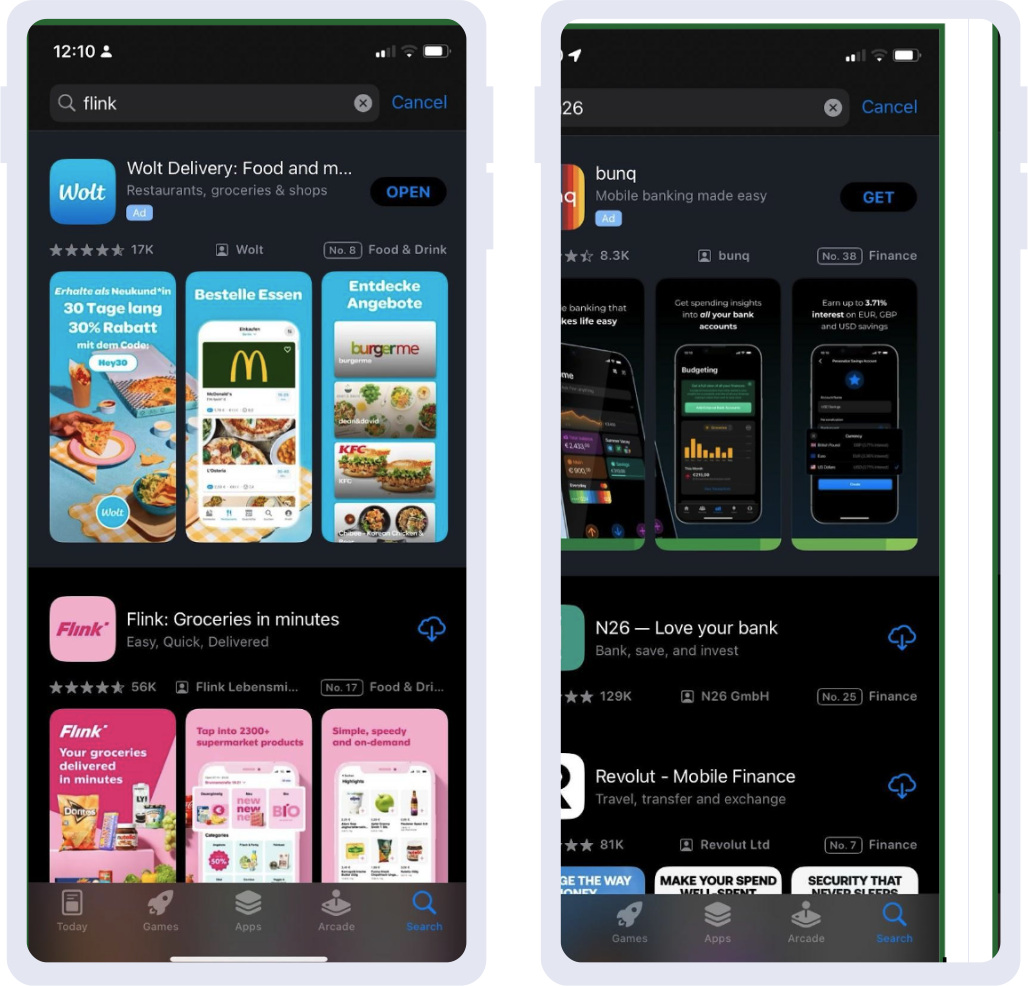
These pages give brands the opportunity to spotlight unique offers, speedy delivery, and other key differentiators. For example, Wolt, a food delivery app, strategically uses a CPP on the App Store to target Flink, a German grocery delivery service. Even when users search specifically for Flink, Wolt’s 30% discount for 30 days might be enough to sway them, particularly when the need for convenience outweighs loyalty.
Food delivery stands out as a prime example.
Users often have high intent—they need to satisfy an immediate need—but they rarely exhibit brand loyalty. Many users juggle multiple delivery apps, choosing the one that best fits their needs in the moment. But this strategy isn’t limited to food delivery: on-demand apps for transportation and shopping can also see benefits.
However, this approach is less effective for non-on-demand services like banking apps.

How can custom product pages boost conversion rates for on-demand apps?
For many on-demand apps, a significant portion of user acquisition and engagement happens via the web.
Users might start an action on the web version of a food delivery or travel booking app, then complete it after downloading the mobile app. Alternatively, they may discover an on-demand app, such as a food delivery service, while browsing the web and later decide to download it from the App Store, influenced by the app’s utility highlighted online.
In these cases, leveraging Custom Product Pages (CPPs) and Custom Store Listings (CSLs) to create a tailored App Store experience ensures users not only download the app but also seamlessly continue or complete the actions they started on the web. For instance, Apple now enables deep links in CPPs, allowing users to land directly on specific in-app pages to finish a task they began earlier.
For a food delivery app, segmenting users by their web preferences (e.g., dietary choices) and linking that experience to a Custom Product Page or Custom Store Listing—like a CPP focused on diet-specific meals or a CSL promoting vegetarian options—can greatly enhance the user journey. This personalized approach can significantly boost both acquisition and engagement.
At Phiture, we applied this strategy while working with Yelp, an app that receives millions of web visits. By segmenting users based on their interests (fashion shopping, restaurant delivery, table bookings, etc.) and designing multiple Custom Product Pages tailored to these preferences, we optimized the user experience and improved engagement based on each user’s web-based interaction.


Connect to the calendar to accelerate growth
On-demand app growth thrives when acquisition strategies are tailored to pre-scheduled events and real-time opportunities.
Planning ahead for critical moments, such as a football match where users are likely to order pizza or responding instantly to unexpected situations like a rainstorm when users need a taxi, allows apps to capture user intent when it’s at its highest.
This dual approach—calendar-based and real-time marketing—drives acquisition, but it also enhances engagement through mobile CRM.
For example, during Euro 2020, we ran a successful campaign for a popular wine delivery app in Italy that capitalized on the excitement of live football matches. We carefully timed promotions around important match moments, increasing app downloads and purchases while building long-term customer loyalty.
The success of this campaign wasn’t just in the event timing—it was in the data-driven segmentation that enabled us to offer personalized discounts and promotions based on user behavior.
Knowing when users are most likely to order, what they typically order, and how much they’re worth is crucial to effectively promoting an on-demand app. Segmentation allows for targeted discounts, reactivation offers, and CRM engagement strategies that can increase lifetime value.


Promotions, loyalty, and re-engagement
For many on-demand apps, you can capture user attention by highlighting promotions that offer added value.
We run promotional creatives for food delivery apps by offering a voucher, a free delivery, and so on, and we’ve seen pretty consistent success with active promotions. It’s important to remember that consumption habits can be hyper-local. We often run campaigns in specific targeted areas where engagements with promotions are higher.
For example, we might split London from the rest of the UK because the market is so important.
For hospitality apps, campaigns around loyalty points can keep users coming back. The more users engage and accumulate points, the more likely they are to return to the app.
Finally, to maximize conversions, re-engagement is key for on-demand apps. Engage early and re-engage during large-scale promotions or seasonal events. In some markets, we run user acquisition campaigns and re-engagement campaigns together to provide a seamless user journey.


Understanding your users drives on-demand success
As the mobile landscape continues to evolve, especially in the highly competitive on-demand app space, small advantages can lead to significant growth. When we look at the most successful on-demand apps, one thing is clear: their edge lies in understanding their users, creating a seamless user journey, and delivering the right product at the right time. While there are numerous strategies and tactics available to help app developers and marketers drive growth, those who truly stand out are leveraging advanced tools to understand their data and enhance the customer experience.
Take Starbucks, for example.
The company has consistently prioritized innovation in its mobile app, not only to meet rising customer expectations but also to stay ahead of market trends and emerging technologies. In their most recent Q3 earnings report, Starbucks revealed 33.8 million 90-day active mobile order and pay users, marking a 10% year-over-year growth in Starbucks Rewards members. This demonstrates how crucial the app has become in driving digital sales and expanding its customer base.
But it’s not just about sales — it’s about loyalty.
The Starbucks app has been instrumental in building stronger relationships with customers through its rewards program. By offering personalized rewards, exclusive benefits, and free drinks, the app fosters deeper emotional connections with customers, driving repeat visits and long-term loyalty.
Starbucks’ success is also tied to how they use AI and data analytics to better engage their customers. During the Q1 2024 earnings call, CEO Laxman Narasimhan highlighted that Starbucks’ use of its Deep Brew AI tool allows them to tailor rewards and offers to specific customer segments, driving greater loyalty and higher transaction volumes.
Marketers who use and understand tools that collect and analyze data through AI have a distinct advantage.


Helping transportation and food delivery companies grow fast
The largest on-demand companies use Singular to grow fast.
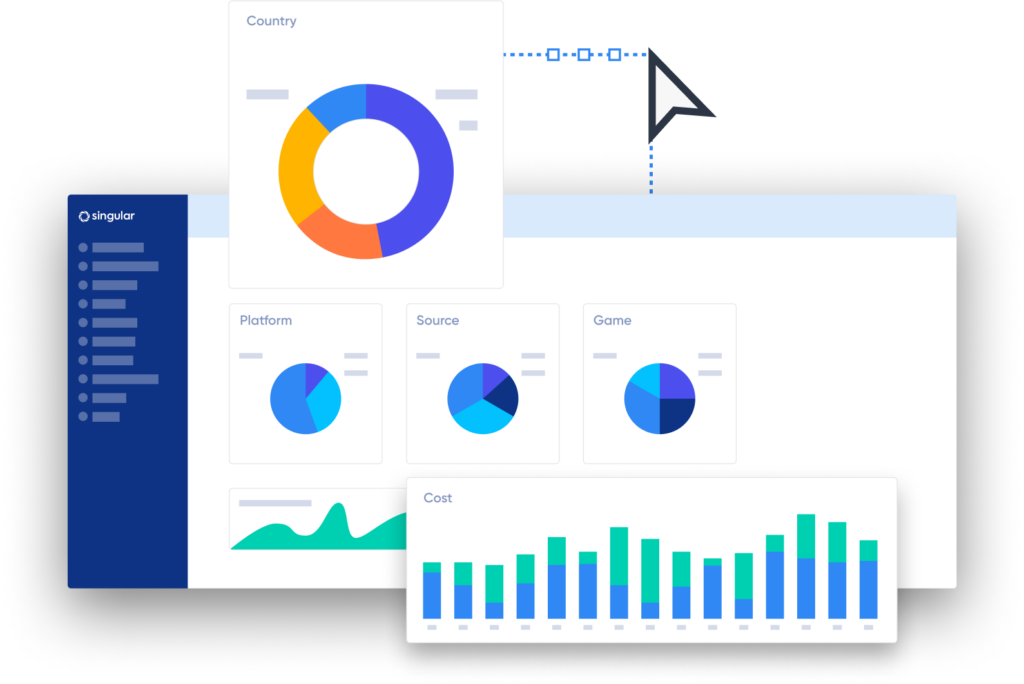
Transportation and food delivery are super-competitive app categories. They’re also multiplatform categories, with many customers using both mobile and web in addition to other channels such as digital out of home and CTV to connect to potential customers.
Singular helps marketers optimize their ad campaigns, integrate all their marketing efforts, measure cross-platform customer journeys, and optimize return on both ad spend and non-advertising marketing investments. We’ve optimized our solution for transportation and food delivery companies in the on-demand space, and we’d love to share how the biggest names use our services to grow faster.