
Content
- Why iOS attribution now requires multiple signals
- How modeled signals are shaping modern iOS measurement
- Why creative is the most powerful lever in iOS user acquisition
- SKAdNetwork has matured, but optimization requires patience
- How CTV is becoming a performance channel for iOS apps
- Scaling strategies for iOS apps are becoming more disciplined
- The big takeaway: iOS growth is still worth the effort
- Watch the full webinar
- Continue sharpening your iOS expertise
Stay up to date on the latest happenings in digital marketing
Summary
-
Embrace Multi-Signal Measurement: Modern iOS app growth requires marketers to integrate various measurement frameworks such as SKAdNetwork, modeled signals, and incrementality testing. This multi-faceted approach allows for more accurate decision-making, as triangulating data from different sources provides clearer directional insights.
-
Prioritize Creative Optimization: With targeting capabilities diminishing, creative strategy has become the primary lever for user acquisition. Teams should focus on rapid creative testing, iterating on successful concepts, and leveraging innovative formats (like playables) to enhance engagement, as well as utilize creative analytics to refine their messaging.
-
Adopt a Patient Scaling Strategy: As the iOS ecosystem evolves, marketers should adopt a disciplined approach to scaling campaigns, implementing step-by-step rollouts instead of aggressive launches. This method, combined with thorough creative analysis and a focus on high-performing ads, will ensure effective budget management and optimized performance across the user journey.
Let’s be honest.
Growing iOS apps today can feel a bit like assembling IKEA furniture without the instructions.
You’ve got SKAdNetwork.
Modeled signals.
Advanced SANs.
Network reporting.
Incrementality tests.
Everything technically works. But making sense of it all? That’s the real challenge.
That’s exactly why we hosted a live panel with growth leaders from Instabridge, Turborilla, YouAppi, Jampp, InMobi, Dataseat (Verve), and Singular to unpack one big question:
How do you actually scale iOS apps in 2026?
If you missed the live session, you can watch the full conversation here

The good news? The playbook is getting clearer.
The bad news? It’s definitely not the same playbook we were using a few years ago.
Below are the biggest takeaways and hot takes from the panel.
Why iOS attribution now requires multiple signals
If there was one myth the panel wanted to kill immediately, it was this one:
There is no single source of truth for iOS performance anymore.
Modern iOS growth operates across multiple measurement frameworks at the same time:
- SKAdNetwork postbacks
- Advanced SANs and view-through logic
- Modeled SAN conversions
- Real-time network reporting
- First-party behavioral data
- Incrementality testing
Each one tells part of the story.
The trick isn’t picking the “right” one.
It’s interpreting them together.
As Wanbing Zhu Andersson, Head of Performance Marketing at Instabridge, explained:
“Signal fragmentation is still real. SKAN, MMP modeling, and network reporting all tell slightly different stories. The goal isn’t perfect agreement. The goal is consistent directional signals across sources.”
From the measurement side, Eran Friedman, CTO and Cofounder at Singular, added an important perspective:
“The industry spent years trying to recreate deterministic attribution after privacy changes. But the real shift is learning how to combine multiple signals intelligently. When SKAN, modeled insights, and incrementality testing are used together, you can still make confident growth decisions.”
Think of it like triangulating your location with GPS satellites.
One signal might be noisy.
Three signals pointing the same direction? Now you can move with confidence.
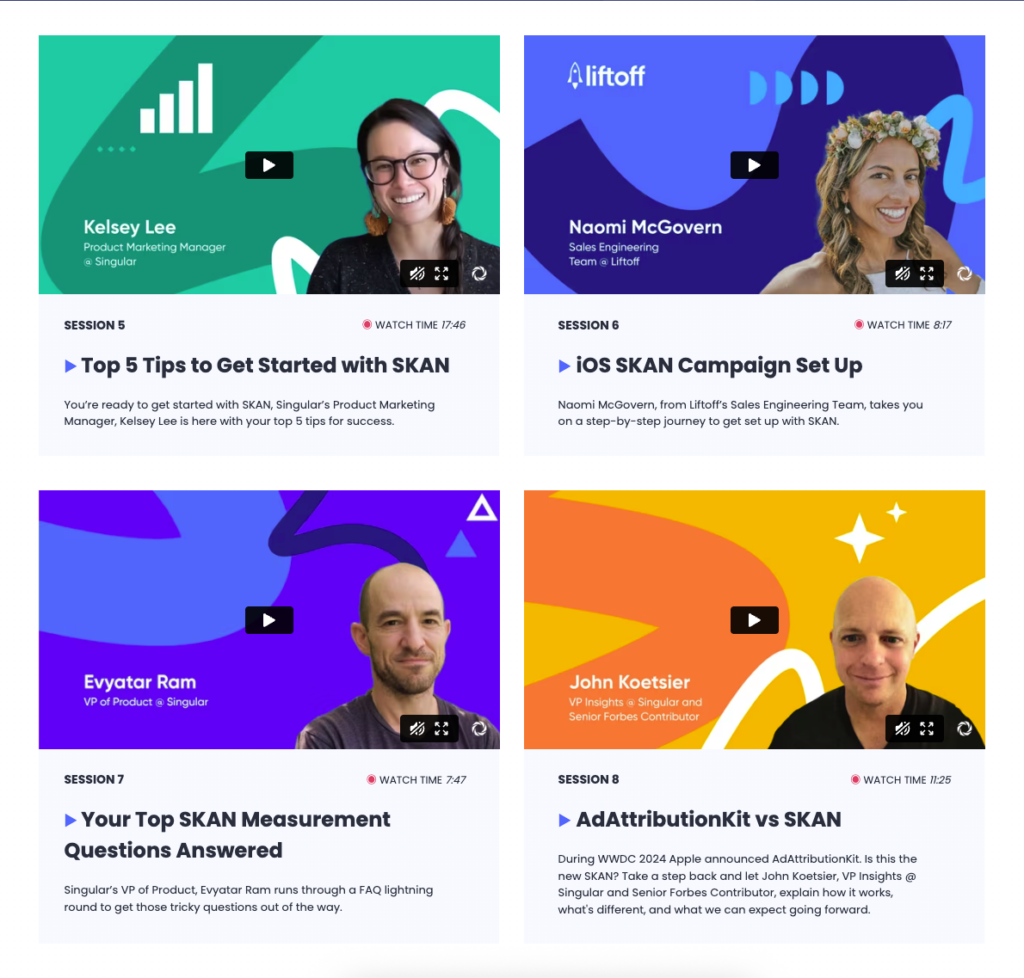
If you want a deeper dive into how modern iOS measurement frameworks work, our iOS measurement workshop breaks down SKAN, Advanced SANs, modeled signals, and incrementality in practical detail.
How modeled signals are shaping modern iOS measurement
A few years ago, probabilistic measurement felt like a compromise.
Today it’s simply part of how mobile marketing works. Most growth teams have accepted that modeled signals are part of the day-to-day optimization toolkit.
As Rocío Vivot, VP North America at Jampp, put it:
“Most growth teams have moved away from expecting full deterministic data. They’ve embraced probabilistic modeling as a necessary standard to maintain the speed and agility required for day-to-day optimization.”
In other words, perfect data would be nice.
But directionally correct data that arrives faster often drives better decisions.
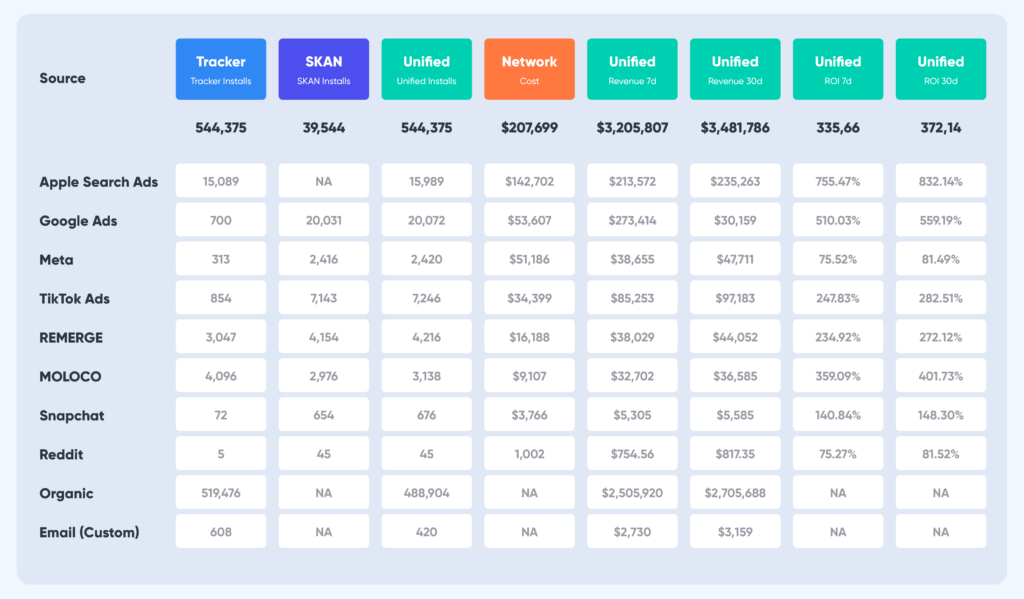
Successful teams typically layer signals like this:
- Modeled conversions for early optimization
- Network signals for pacing
- SKAN postbacks for validation
- Incrementality testing for truth
When those signals align, marketers know they’re on the right track. This is one reason many teams rely on a mobile attribution platform that can unify multiple measurement frameworks into one dataset and normalize signals across partners.
Why creative is the most powerful lever in iOS user acquisition
Remember when targeting was the main lever for performance?
Those days are mostly gone.
Today, creative is the most powerful optimization lever available to iOS marketers.
As Elisa Lozano, Sr. Sales Director at InMobi, explained:
“Signal loss with SKAN has changed the levers you can control when it comes to optimization. Creative is one of the few things you can consistently change and test. In a world full of ads, breaking through the noise depends on constantly evolving your creative message.”
That means high-performing teams are investing heavily in:
- rapid creative testing
- iterating on winning concepts
- new formats like playables and UGC
- AI tools that accelerate production
The goal isn’t just more creative.
It’s finding the creative ideas that actually drive engagement and installs.
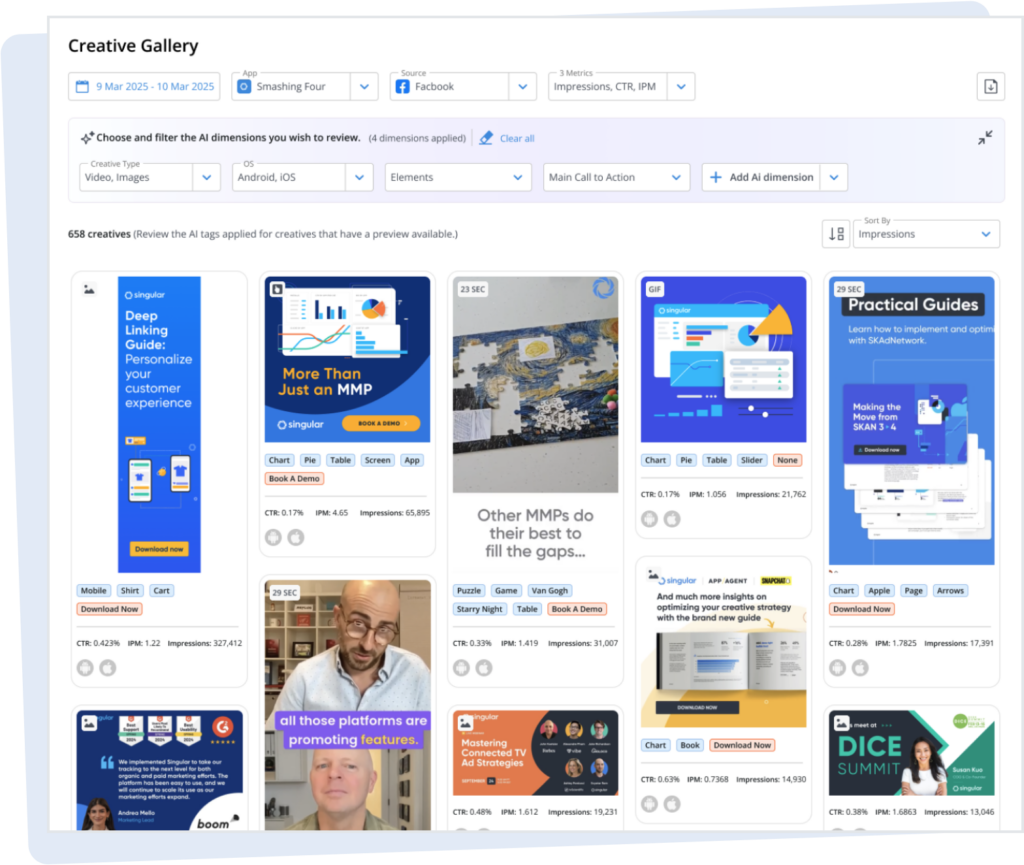
Tools like creative analytics platforms can help marketers identify which creative elements drive performance across campaigns and channels.
SKAdNetwork has matured, but optimization requires patience
SKAdNetwork has come a long way.
What once felt like a mysterious black box is now part of many teams’ standard measurement workflows.
Mark Menery, SVP Global Head of Sales at Dataseat (Verve) shared this perspective:
“Advertisers are far more comfortable with SKAN as a source of truth today. Conversion value strategy has become part of teams’ playbooks, and MMP modeling has helped reduce a lot of the guessing around optimization.”
But SKAN still comes with one unavoidable tradeoff:
Speed.
“Day-to-day changes are harder on SKAN because of delays and privacy thresholds. We typically see larger budget swings once conversion volume clears those thresholds and MMP modeling helps validate the data.”
In other words, optimization still works.
It just requires a bit more patience than the pre-ATT era.
How CTV is becoming a performance channel for iOS apps
One of the more surprising insights from the panel was how frequently connected TV (CTV) came up in the conversation.
CTV used to be viewed mostly as an awareness channel.
That’s changing.
As Mark Menery noted:
“CTV is a great way to capture audiences that may be less engaged with mobile ads. The key is to test more aggressively than you think you need to.”
CTV exposure often drives downstream behaviors like:
- App Store searches
- branded installs
- assisted conversions across channels
Which leads to an important mindset shift.
Instead of optimizing channels individually, growth teams are increasingly thinking about ecosystem performance across the entire user journey.
Scaling strategies for iOS apps are becoming more disciplined
From the advertiser perspective, John Wright, CEO of Turborilla, described how iOS growth strategies have evolved.
In short, things are a bit less chaotic now.
“We’re much more reserved in scaling these days. Instead of turning everything on and going full speed, campaigns are rolled out step by step and scaled more steadily.”
Creative analysis has also become far more sophisticated:
“Creative on SDK networks has become the last real optimization lever we have. Playables are incredibly important, and you need to be doing ROAS-level creative analysis.”
But John also offered a useful warning for teams ramping up creative production:
“Creative production has scaled massively, but you have to avoid producing too much slop. The goal is always to find the hero creatives that actually drive performance.”
More ads isn’t the goal.
Better ads are.
The big takeaway: iOS growth is still worth the effort
Yes, the ecosystem is more complex now.
Yes, attribution signals are messier.
But the panel was unanimous on one point:
iOS remains one of the highest-value ecosystems for mobile growth.
The teams winning in 2026 simply operate with a different playbook:
- combine multiple measurement signals
- validate performance with incrementality testing
- prioritize creative velocity
- diversify acquisition channels
- measure performance across the full ecosystem
Or as one takeaway from the session summed it up:
iOS is complex, but it’s absolutely measurable. And still incredibly valuable.
Watch the full webinar
If you want to hear the full discussion and see the frameworks shared by the panel, you can watch the session on demand here.

Continue sharpening your iOS expertise
If iOS measurement is a key part of your role, you may also want to explore our iOS Measurement Workshop.
This video series breaks down the modern iOS measurement stack in practical, operator-level detail, including:
- SKAdNetwork conversion value strategies
- Advanced SANs and modeled signals
- incrementality testing frameworks
- interpreting performance across signals
It’s designed to help growth teams build real operational fluency in modern iOS measurement.